
Mastering oboe fingerings requires a unique approach compared to other woodwind instruments. The oboe's double reed, conical bore, and complex key system create distinctive challenges and opportunities. This comprehensive guide covers everything from fundamental techniques for complete beginners to advanced fingerings, reed considerations, and professional performance strategies.
Essential Foundations for Oboe Playing
Before you can play beautiful melodies, you need to master the fundamental aspects of oboe playing: reed care, proper embouchure, breath control, fingering techniques, and basic articulation.
Understanding Your Double Reed
The reed is the heart of the oboe sound. A good student reed makes learning significantly easier.
- Choose student reeds: Select medium-soft or medium strength from reputable makers
- Soak properly: 1–3 minutes in room-temperature water (never saliva) before playing
- Check response: A beginner reed should speak easily from low to middle range with modest air
- Avoid over-adjusting: Leave scraping to professionals until your tone and control are consistent
1. Developing the Correct Embouchure
Oboe embouchure should be stable yet flexible. Avoid the "biting" trap.
- Corners forward and firm: Think "oo," draw corners slightly forward to create a cushion
- Lips over teeth: Lightly roll lips over teeth to protect the reed and seal air
- Minimal jaw pressure: Support with corners and air—not jaw clamping
- Reed depth: Insert only 3–5 mm past the tip; too deep sharpens and thins tone
- Release tension: Between phrases, reset your corners to avoid creep-tightening
2. Mastering Breath Control and Intonation
Unlike many winds, the oboe uses slow, supported air—think "warm air fogging a mirror."
- Use the belly/back: Breathe low and expand 360°; keep chest relaxed
- Steady airflow: Imagine a calm stream—stability fixes most intonation issues
- Pitch tendencies: Low notes tend flat; high notes tend sharp—counter with air speed and embouchure cushion, not jaw pressure
- Tuner strategy: Long tones with a drone (not just a tuner) build better pitch center
3. Balanced Posture and Hand Setup
- Spine tall, shoulders free: Avoid raising shoulders on inhalation
- Instrument angle: Slightly forward from vertical; avoid "leaning back"
- Left hand: Thumb on octave key, curved fingers close to keys—no collapsing knuckles
- Right hand: Thumb on rest, wrist neutral, pinky ready over low keys
4. Basic Articulation Techniques
Learn these fundamental articulation methods:
- Long tones: Sustained notes for breath control
- Legato: Smooth, connected notes
- Staccato: Short, detached notes
- Tonguing: Using the tongue to articulate notes (say "tah" while playing)
Understanding Oboe Anatomy
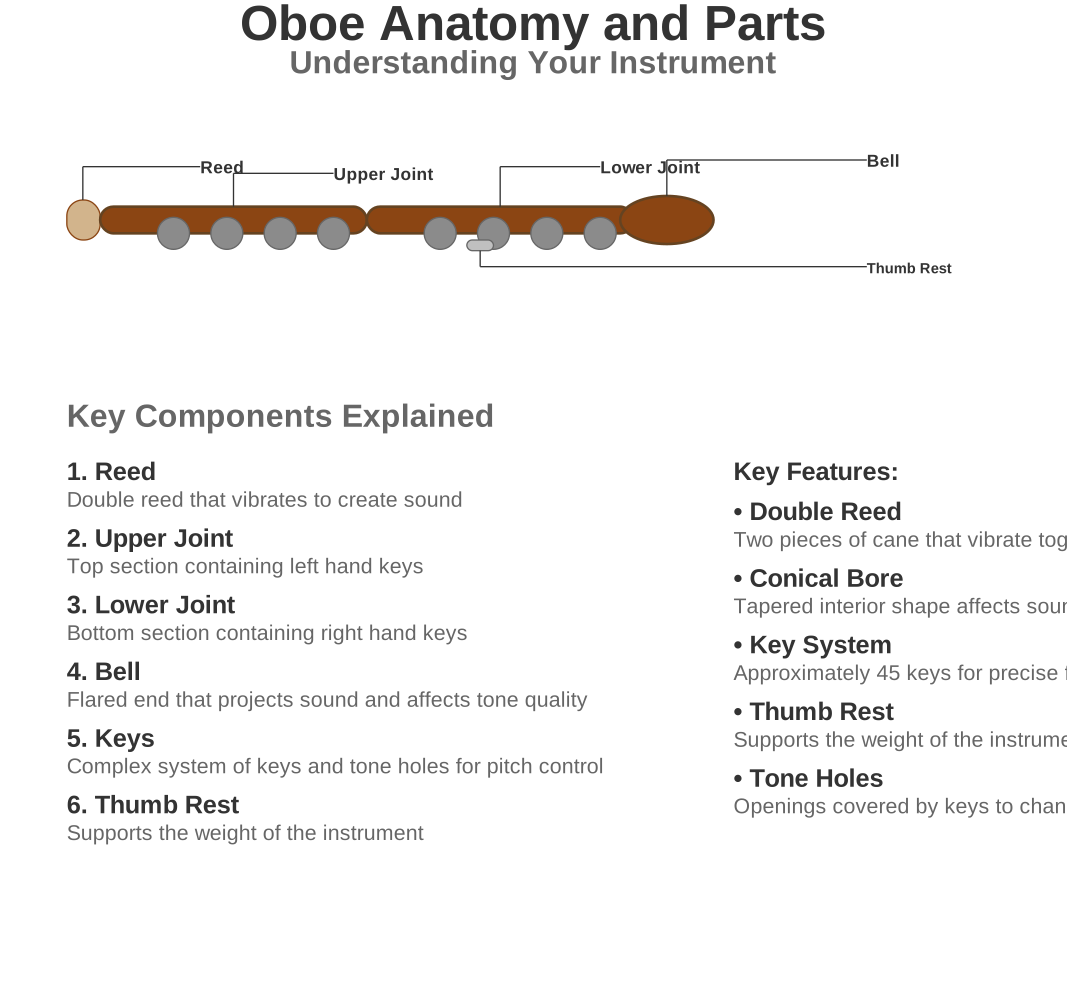
Knowing the oboe's main parts helps you understand how sound is produced and how fingerings work.
- Reed: Double reed that vibrates to generate sound—your "mouthpiece"
- Staple and Cork: Connects reed securely to the top joint
- Upper (Top) Joint: Houses many tone holes and the octave key
- Lower (Bottom) Joint: Contains low note keys and right-hand mechanism
- Bell: Flares the sound; impacts resonance and projection
- Keywork: System of levers, rods, trill and auxiliary keys enabling chromatic playing
Understanding Musical Notes
Musical notes are organized in a specific pattern. Understanding this pattern is crucial for reading music and learning fingerings.
Music Theory Basics for Oboe Beginners
- Musical alphabet: A–B–C–D–E–F–G, then repeats
- Accidentals: ♯ raises a note a half step; ♭ lowers a note a half step
- Half/whole steps: Smallest interval vs. two half steps
- Key centers to start: B♭ major and F major are beginner-friendly
Oboe Range and Registers
Typical practical range for students spans from B♭3 to G5+, with comfort growing over time.
- Low register: B♭3–C4—requires steady, warm air
- Middle register: D4–B♭5—most stable for beginners
- Upper register: C5 and above—use octave key and focused embouchure
Daily Practice Routine for Beginners
Structure your practice sessions for maximum effectiveness:
Daily Warm-up Routine (10-15 minutes)
- Reed preparation: Soak and test reed response (5 minutes)
- Long tones: Hold each note (B♭4-F5) for 8 counts, focusing on steady air and consistent tone
- Scale fragments: Practice B♭ major scale in small groups (3-4 notes)
- Articulation practice: Tongue each note cleanly with "tah" syllables
10-Minute Technique Practice
- Core fingerings: Practice B♭4–G5 everyday fingerings
- Octave key habits: Use left thumb deliberately—don't "park" it on the key
- Slur first, then tongue: Build motion smoothness before adding articulation
10-Minute Song Practice
- Start with simple melodies
- Focus on correct fingering and steady tone
- Don't worry about speed - accuracy comes first
Important: Practice no more than 40 minutes daily to avoid fatigue.
A 4-Week Starter Plan
- Week 1: Reed care, posture, long tones (B♭4–F5), simple echo patterns
- Week 2: Add core fingerings (B♭4–G5), slow slur patterns, basic tonguing "t"
- Week 3: Major scale fragments (B♭, F), articulation contrast (legato vs. staccato)
- Week 4: Full one-octave scales, simple melodies, dynamic control pp–mf
Troubleshooting Common Beginner Problems
Every oboe beginner faces these challenges. Here's how to solve them:
Sound Production Issues
- No sound: Check reed soak time (1-3 minutes), ensure proper embouchure seal, verify reed isn't cracked
- Weak, airy tone: Increase air support from diaphragm, check reed depth (3-5mm), strengthen embouchure corners
- Harsh, biting sound: Reduce jaw pressure, soften embouchure, use more air support instead of pressure
- Inconsistent response: Rotate between 2-3 reeds, check reed condition, practice long tones daily
Intonation Problems
- Notes too sharp: Use less jaw pressure, increase air speed, check reed depth
- Notes too flat: Increase air support, firm up embouchure corners, check posture
- Pitch instability: Practice with drone tones, focus on steady air stream, avoid temperature changes
Technical Difficulties
- Slow finger movement: Practice scales slowly, keep fingers curved and close to keys, use metronome
- Octave key confusion: Practice octave leaps slowly, memorize which notes need the octave key
- Articulation problems: Start with "tah" syllables, practice legato first, then add staccato
Common Beginner Pitfalls (and Fixes)
- Biting the reed: If tone is thin and sharp, soften jaw, increase air support
- Reed too dry: If response is resistant, re-soak briefly and reset embouchure
- Collapsed fingers: Keep rounded knuckles; move from base joints for speed
- Wandering pitch: Practice with drones; prioritize air steadiness over finger speed
Essential Equipment for Beginners
- 2–3 reliable student reeds rotated daily
- Reed case with ventilation to prevent mold
- Swab (silk or microfiber) and small cloth for keys
- Tuner + drone app for intonation training
- Metronome with subdivision options
- Music stand and chair that supports upright posture
Equipment Care and Maintenance
Proper care extends your instrument's life and improves your playing:
Daily Care Routine
- Reed care: Soak 1-3 minutes before playing, store in ventilated case, rotate daily
- Instrument swabbing: Use silk swab after each practice session
- Key cleaning: Wipe keys with soft cloth to remove moisture and fingerprints
- Assembly/disassembly: Handle joints carefully, avoid forcing connections
Weekly Maintenance
- Deep cleaning: Use cleaning rod with cloth for bore cleaning
- Key oiling: Apply small amount of key oil to pivot points (monthly)
- Reed evaluation: Check reed condition, replace if cracked or unresponsive
- Case organization: Keep accessories organized and easily accessible
Progressive Learning Path
Follow this structured approach to build your oboe skills systematically:
Months 1-2: Foundation Building
- Master basic embouchure and air support
- Learn core fingerings (B♭4-G5)
- Develop consistent tone production
- Practice basic articulation
Months 3-4: Skill Expansion
- Add octave key technique
- Expand range to A5 and low notes
- Develop dynamic control
- Learn major scales
Months 5-6: Musical Development
- Practice etudes and studies
- Learn orchestral excerpts
- Develop vibrato technique
- Explore musical expression
How to Hold an Oboe Correctly
Mastering proper oboe holding technique is essential for successful oboe playing. The oboe's unique design with its double reed and complex key system requires specialized posture and hand positioning that differs significantly from other woodwind instruments. Correct oboe holding technique provides numerous benefits that directly impact your playing ability.
Why Proper Oboe Holding Matters
- Enhanced Reed Control: Correct posture allows for better embouchure control and reed response
- Improved Breath Support: Proper positioning enables optimal diaphragm engagement
- Better Intonation: Correct posture supports consistent embouchure formation
- Increased Endurance: Proper positioning reduces muscle tension and fatigue
- Superior Tone Quality: Optimal posture enables consistent air flow and embouchure stability
- Reduced Injury Risk: Proper posture prevents repetitive strain injuries
Understanding Oboe-Specific Challenges
The oboe presents unique challenges that require specialized holding techniques. Unlike single-reed instruments, the oboe's double reed and complex key system demand precise coordination and specialized posture.
Key Characteristics of Oboe Playing
- Double Reed: Requires specialized embouchure and breath support
- Complex Key System: Demands precise finger coordination
- Vertical Position: Unlike horizontal instruments, oboe is held vertically
- Reed Sensitivity: Small embouchure changes significantly affect sound
- Breath Control: Requires exceptional breath management for sustained notes
- Posture Demands: Vertical position requires specific body alignment
Basic Oboe Holding Position
Start with the fundamental holding position that forms the foundation for all oboe playing.
Body Posture
- Seated Position: Sit on the front half of your chair, feet flat on the floor
- Spine Alignment: Keep your spine straight but relaxed
- Shoulder Position: Shoulders relaxed and level, not raised
- Head Position: Head balanced naturally, looking slightly down at the reed
- Arm Position: Arms comfortably positioned for key access
Instrument Position
- Vertical Alignment: Oboe should be held vertically, not horizontally
- Reed Position: Reed should be centered on your lips
- Instrument Angle: Slight forward angle (about 15-20 degrees)
- Distance from Body: Close enough for comfortable hand position
- Weight Distribution: Balance the instrument between both hands
Left Hand Position
The left hand controls the upper register keys and provides primary support for the instrument.
Left Hand Placement
- Thumb Position: Place thumb on the thumb rest for support
- Index Finger: Rest on the first key (B key)
- Middle Finger: Position on the second key (A key)
- Ring Finger: Place on the third key (G key)
- Pinky Finger: Rest on the pinky keys (G# and C#)
Left Hand Technique
- Finger Curvature: Maintain natural finger curve for key coverage
- Key Pressure: Press keys with fingertips, ensuring complete coverage
- Thumb Support: Use thumb rest to balance the instrument
- Relaxation: Keep hand relaxed to prevent tension
- Independent Movement: Develop finger independence for complex passages
Right Hand Position
The right hand controls the lower register keys and provides additional support for the instrument.
Right Hand Placement
- Thumb Position: Place under the instrument for support
- Index Finger: Rest on the F key
- Middle Finger: Position on the E key
- Ring Finger: Place on the D key
- Pinky Finger: Rest on the C key and pinky keys
Right Hand Technique
- Finger Alignment: Keep fingers perpendicular to keys
- Key Coverage: Ensure complete key coverage for proper sealing
- Thumb Support: Use thumb to stabilize the instrument
- Relaxation: Maintain relaxed hand position
- Coordination: Develop coordination between both hands
Common Holding Mistakes and Solutions
Many oboe players develop incorrect holding habits that can limit their progress and cause physical problems.
Mistake: Gripping Too Tightly
Problem: Holding the oboe with excessive tension
Solution: Practice holding the instrument with minimal pressure, allowing it to rest naturally in your hands
Mistake: Incorrect Finger Position
Problem: Fingers not properly positioned on keys
Solution: Ensure each finger is centered on its respective key with proper curvature
Mistake: Poor Posture
Problem: Slouching or leaning while playing
Solution: Maintain straight spine and relaxed shoulders
Mistake: Incorrect Instrument Angle
Problem: Holding oboe at incorrect angle
Solution: Keep instrument vertical with slight forward angle
Developing Proper Holding Technique
Building correct oboe holding technique requires consistent practice and attention to detail.
Daily Practice Routine for Holding
- Posture Check (5 minutes): Begin each practice session with posture review
- Holding Position (10 minutes): Practice holding the oboe without playing
- Finger Placement (15 minutes): Work on precise finger positioning
- Breath Support (10 minutes): Practice breathing while maintaining posture
- Long Tones (20 minutes): Play long tones while focusing on posture
Progressive Development
- Week 1-2: Focus on basic holding position
- Week 3-4: Develop finger independence
- Week 5-6: Work on breath support with posture
- Week 7-8: Integrate all elements for smooth playing
Advanced Oboe Holding Techniques
Once you've mastered the basics, you can develop more advanced holding techniques for specific musical situations.
Orchestral Playing
- Extended Sessions: Maintain posture for long rehearsals
- Score Reading: Hold oboe while reading music
- Conductor Awareness: Maintain posture while watching conductor
- Section Playing: Coordinate with other woodwind players
Solo Performance
- Stage Presence: Project confidence through posture
- Movement Integration: Maintain posture while moving
- Audience Connection: Balance posture with engagement
- Expression: Use posture to enhance musical expression
Maintaining Proper Technique
Consistent practice of proper holding technique is essential for long-term success on the oboe.
Regular Check-ups
- Daily Review: Check posture at the beginning of each practice session
- Weekly Assessment: Evaluate your progress and make adjustments
- Monthly Evaluation: Review your overall technique development
Common Maintenance Issues
- Fatigue: Take breaks to prevent muscle tension
- Injury Prevention: Stop if you experience pain or discomfort
- Technique Refinement: Continuously work on improving your holding technique
The Science Behind Oboe Fingerings
Oboe fingerings work through a combination of tone hole coverage and key combinations that change the instrument's effective length. The conical bore and double reed create unique acoustic properties that require specialized fingering techniques.
Oboe-Specific Characteristics
- Double Reed: Creates unique embouchure and air pressure requirements
- Conical Bore: Different acoustic properties than cylindrical instruments
- Complex Key System: More keys than most woodwinds for precise intonation
- Reed Sensitivity: Fingerings must work with reed characteristics
- Intonation Challenges: Requires constant embouchure and air adjustments
Understanding these characteristics is crucial for effective oboe playing. The double reed's sensitivity means that even slight changes in finger pressure can significantly affect tone quality and intonation.
Complete Fingering Chart by Register
For an interactive experience with our detailed fingering charts, visit our Interactive Oboe Fingering Chart page.
Low Register (B♭3 to B4)
The low register requires strong breath support and precise embouchure control. These notes are fundamental for building a solid foundation.
| Note | Fingering | Key Combination | Reed Considerations |
|---|---|---|---|
| B♭3 | All keys down | All keys closed | Requires strong reed |
| B3 | All except B♭ | B♭ key open | Good reed response |
| C4 | All except B♭, B | B♭, B keys open | Fundamental note |
| C#4 | All except B♭, B, C | B♭, B, C keys open | Use C# key |
| D4 | All except B♭, B, C, C# | B♭, B, C, C# keys open | Good for beginners |
| E♭4 | All except B♭, B, C, C#, D | B♭, B, C, C#, D keys open | Use E♭ key |
| E4 | All except B♭, B, C, C#, D, E♭ | B♭, B, C, C#, D, E♭ keys open | Strong breath support |
| F4 | All except B♭, B, C, C#, D, E♭, E | B♭, B, C, C#, D, E♭, E keys open | Use F key |
| F#4 | All except B♭, B, C, C#, D, E♭, E, F | B♭, B, C, C#, D, E♭, E, F keys open | Use F# key |
| G4 | All except B♭, B, C, C#, D, E♭, E, F, F# | B♭, B, C, C#, D, E♭, E, F, F# keys open | Good for beginners |
| G#4 | All except B♭, B, C, C#, D, E♭, E, F, F#, G | B♭, B, C, C#, D, E♭, E, F, F#, G keys open | Use G# key |
| A4 | All except B♭, B, C, C#, D, E♭, E, F, F#, G, G# | B♭, B, C, C#, D, E♭, E, F, F#, G, G# keys open | Fundamental note |
| B♭4 | All except B♭, B, C, C#, D, E♭, E, F, F#, G, G#, A | B♭, B, C, C#, D, E♭, E, F, F#, G, G#, A keys open | Use B♭ key |
| B4 | All except B♭, B, C, C#, D, E♭, E, F, F#, G, G#, A, B♭ | B♭, B, C, C#, D, E♭, E, F, F#, G, G#, A, B♭ keys open | Fundamental note |
Middle Register (C5 to B5)
The middle register is where most oboe music is written. These notes require precise embouchure control and are essential for orchestral and solo playing.
| Note | Fingering | Key Combination | Octave Key |
|---|---|---|---|
| C5 | All except B♭, B, C | B♭, B, C keys open | Octave key |
| C#5 | All except B♭, B, C, C# | B♭, B, C, C# keys open | Octave key |
| D5 | All except B♭, B, C, C#, D | B♭, B, C, C#, D keys open | Octave key |
| E♭5 | All except B♭, B, C, C#, D, E♭ | B♭, B, C, C#, D, E♭ keys open | Octave key |
| E5 | All except B♭, B, C, C#, D, E♭, E | B♭, B, C, C#, D, E♭, E keys open | Octave key |
| F5 | All except B♭, B, C, C#, D, E♭, E, F | B♭, B, C, C#, D, E♭, E, F keys open | Octave key |
| F#5 | All except B♭, B, C, C#, D, E♭, E, F, F# | B♭, B, C, C#, D, E♭, E, F, F# keys open | Octave key |
| G5 | All except B♭, B, C, C#, D, E♭, E, F, F#, G | B♭, B, C, C#, D, E♭, E, F, F#, G keys open | Octave key |
| G#5 | All except B♭, B, C, C#, D, E♭, E, F, F#, G, G# | B♭, B, C, C#, D, E♭, E, F, F#, G, G# keys open | Octave key |
| A5 | All except B♭, B, C, C#, D, E♭, E, F, F#, G, G#, A | B♭, B, C, C#, D, E♭, E, F, F#, G, G#, A keys open | Octave key |
| B♭5 | All except B♭, B, C, C#, D, E♭, E, F, F#, G, G#, A, B♭ | B♭, B, C, C#, D, E♭, E, F, F#, G, G#, A, B♭ keys open | Octave key |
| B5 | All except B♭, B, C, C#, D, E♭, E, F, F#, G, G#, A, B♭, B | B♭, B, C, C#, D, E♭, E, F, F#, G, G#, A, B♭, B keys open | Octave key |
High Register (C6 to A6)
The high register requires advanced embouchure control and strong breath support. These notes are challenging but essential for advanced oboe playing.
| Note | Fingering | Key Combination | Technique |
|---|---|---|---|
| C6 | All except B♭, B, C | B♭, B, C keys open | Focused embouchure |
| C#6 | All except B♭, B, C, C# | B♭, B, C, C# keys open | High air speed |
| D6 | All except B♭, B, C, C#, D | B♭, B, C, C#, D keys open | Focused air stream |
| E♭6 | All except B♭, B, C, C#, D, E♭ | B♭, B, C, C#, D, E♭ keys open | Strong support |
| E6 | All except B♭, B, C, C#, D, E♭, E | B♭, B, C, C#, D, E♭, E keys open | Controlled pressure |
| F6 | All except B♭, B, C, C#, D, E♭, E, F | B♭, B, C, C#, D, E♭, E, F keys open | Precise embouchure |
| F#6 | All except B♭, B, C, C#, D, E♭, E, F, F# | B♭, B, C, C#, D, E♭, E, F, F# keys open | Advanced technique |
| G6 | All except B♭, B, C, C#, D, E♭, E, F, F#, G | B♭, B, C, C#, D, E♭, E, F, F#, G keys open | Expert level |
| G#6 | All except B♭, B, C, C#, D, E♭, E, F, F#, G, G# | B♭, B, C, C#, D, E♭, E, F, F#, G, G# keys open | Professional level |
| A6 | All except B♭, B, C, C#, D, E♭, E, F, F#, G, G#, A | B♭, B, C, C#, D, E♭, E, F, F#, G, G#, A keys open | Master level |
Understanding Reed Considerations
Oboe fingerings are significantly affected by reed characteristics. Understanding this relationship is crucial for successful oboe playing.
Reed Strength and Response
- Soft Reeds: Easier to play but may lack projection
- Medium Reeds: Good balance of ease and projection
- Hard Reeds: More projection but require stronger embouchure
- Reed Age: New reeds may need different fingerings than broken-in reeds
Reed-Specific Fingering Adjustments
- Sharp Reeds: May require opening additional keys
- Flat Reeds: May require closing additional keys
- Resistant Reeds: May need more air support
- Free Reeds: May need less air support
Advanced Fingering Techniques
Alternate Fingerings
Many notes can be played with different fingerings, each offering unique advantages for specific musical contexts:
High C (C6) - Multiple Options
- Standard: All except B♭, B, C with octave key
- Forked F: Alternative for certain passages
- Thumb F: Useful for trills and rapid passages
High D (D6) - Flexibility Options
- Standard: All except B♭, B, C, C#, D with octave key
- Forked F: Alternative for certain passages
- Thumb F: Useful in rapid sequences
Trill Fingerings
Many notes require specialized trill fingerings for smooth execution:
Common Trill Fingerings
- C to D trill: Use C# trill key
- D to E trill: Use D# trill key
- F to G trill: Use F# trill key
- G to A trill: Use G# trill key
Oboe-Specific Challenges
Intonation Issues
Oboe intonation is notoriously difficult due to the double reed and conical bore:
- Reed Sensitivity: Small changes in reed affect intonation significantly
- Embouchure Changes: Tiny adjustments can cause pitch changes
- Air Pressure: Air speed affects pitch more than on other instruments
- Temperature Sensitivity: Reeds are affected by temperature and humidity
Breath Support Requirements
Oboe playing requires exceptional breath control due to the double reed's resistance:
- Slow Air Stream: Unlike flute, oboe requires slow, controlled air
- Consistent Pressure: Maintain steady air pressure throughout phrases
- Diaphragmatic Support: Use abdominal muscles for air control
- Dynamic Control: Precise control over volume and intensity
Practice Strategies for Mastery
Daily Oboe Practice Routine
- Reed Preparation (5 minutes): Soak and test reed response
- Long Tones (15 minutes): Practice each note for 4 beats, focusing on steady tone and correct intonation
- Scale Practice (20 minutes): Work through major and minor scales in all keys
- Arpeggio Studies (15 minutes): Practice chord arpeggios to improve finger coordination
- Interval Training (15 minutes): Practice jumping between different notes
- Speed Studies (20 minutes): Gradually increase tempo while maintaining accuracy
- Intonation Work (15 minutes): Use a tuner to practice precise pitch control
Memory Techniques
- Pattern Recognition: Notice that many fingerings follow logical patterns
- Visual Association: Create mental images of finger positions
- Muscle Memory: Practice until fingerings become automatic
- Progressive Learning: Master one octave before moving to the next
Common Fingering Mistakes and Solutions
Mistake: Inconsistent Finger Pressure
Problem: Some keys pressed harder than others
Solution: Practice with a mirror, ensuring all keys are pressed with equal pressure
Mistake: Slow Finger Transitions
Problem: Hesitation between fingerings
Solution: Practice slow, deliberate movements, then gradually increase speed
Mistake: Incorrect Finger Placement
Problem: Fingers not centered on keys
Solution: Use proper hand position with fingers perpendicular to keys
Mistake: Collapsed Fingers
Problem: Fingers collapsing or not maintaining proper curvature
Solution: Keep rounded knuckles; move from base joints for speed
Mistake: Lack of Practice Structure
Problem: Not setting weekly goals for scales, pieces, and long tones
Solution: Create a structured practice plan with specific goals and track your progress regularly
Technology and Modern Learning Tools
Modern technology offers excellent resources for learning oboe fingerings:
Interactive Fingering Charts
- Visual demonstration of each fingering
- Audio examples for each note
- Progressive difficulty levels
- Real-time feedback on accuracy
Mobile Apps and Software
- Metronome apps for timing practice
- Tuning apps for intonation work
- Recording software for self-assessment
- Virtual oboe simulators
Building Speed and Accuracy
Progressive Speed Training
- Start Slow: Begin at 60 BPM, ensuring perfect accuracy
- Gradual Increase: Add 5 BPM each week
- Maintain Quality: Never sacrifice accuracy for speed
- Record Progress: Track your improvement over time
Accuracy Drills
- Random Note Practice: Have someone call out random notes
- Pattern Recognition: Practice common fingering sequences
- Blind Practice: Play without looking at your fingers
- Mirror Practice: Watch your finger movements for consistency
Setting Realistic Expectations
- Week 1-2: Focus on producing a clear, steady tone on a few notes with proper reed care
- Week 3-4: Begin playing simple scales and short melodies
- Month 2-3: Start working on more complex pieces and faster passages
Remember, progress varies for each individual. Consistent daily practice is more important than the amount of time spent in each session.
Quick Improvement Tips
1. Reed Care and Rotation
Rotate between 2-3 reeds daily to prevent overuse and maintain consistent response. Always soak reeds properly before playing.
2. Long Tone Training
Spend 10 minutes daily on sustained notes from low to high register. This improves breath control and intonation.
3. Articulation Practice
Use the "tah" syllable to practice clean articulation. This makes your notes crisp and clear.
4. Octave Key Technique
Practice octave leaps slowly, memorizing which notes need the octave key. Use left thumb deliberately—don't "park" it on the key.
Conclusion
Mastering oboe fingerings is a journey that requires patience, consistent practice, and a systematic approach. Whether you're a complete beginner learning your first notes or an advanced player seeking to perfect your technique, this comprehensive guide provides everything you need to develop the finger dexterity and muscle memory needed for oboe playing.
Remember that fingerings are just one aspect of oboe playing. Combine your fingering practice with work on embouchure, breath control, reed care, and musical expression to become a well-rounded oboist. Start with the fundamentals, build your skills progressively, and celebrate small victories along the way. With dedication and the right approach, you'll be playing beautiful music on the oboe in no time.