
Fife Fingering Chart
Interactive fingering demonstration + beginner learning guide + free PDF download
Interactive Fife Fingering Chart
🎵 How to Use This Interactive Chart
Step 1: Choose Key Signature
Select your desired key signature from the dropdown menu. This will show you which notes are sharp or flat in that key.
Step 2: Click on a Note
Click any note button below to see the correct hole fingering. The fife diagram will highlight the holes you need to cover.
Step 3: Learn the Fingering
Study the highlighted holes on the fife and read the fingering description. Practice until it becomes automatic!
Select a Note
Fife Fingering Chart Image (PRINTABLE)
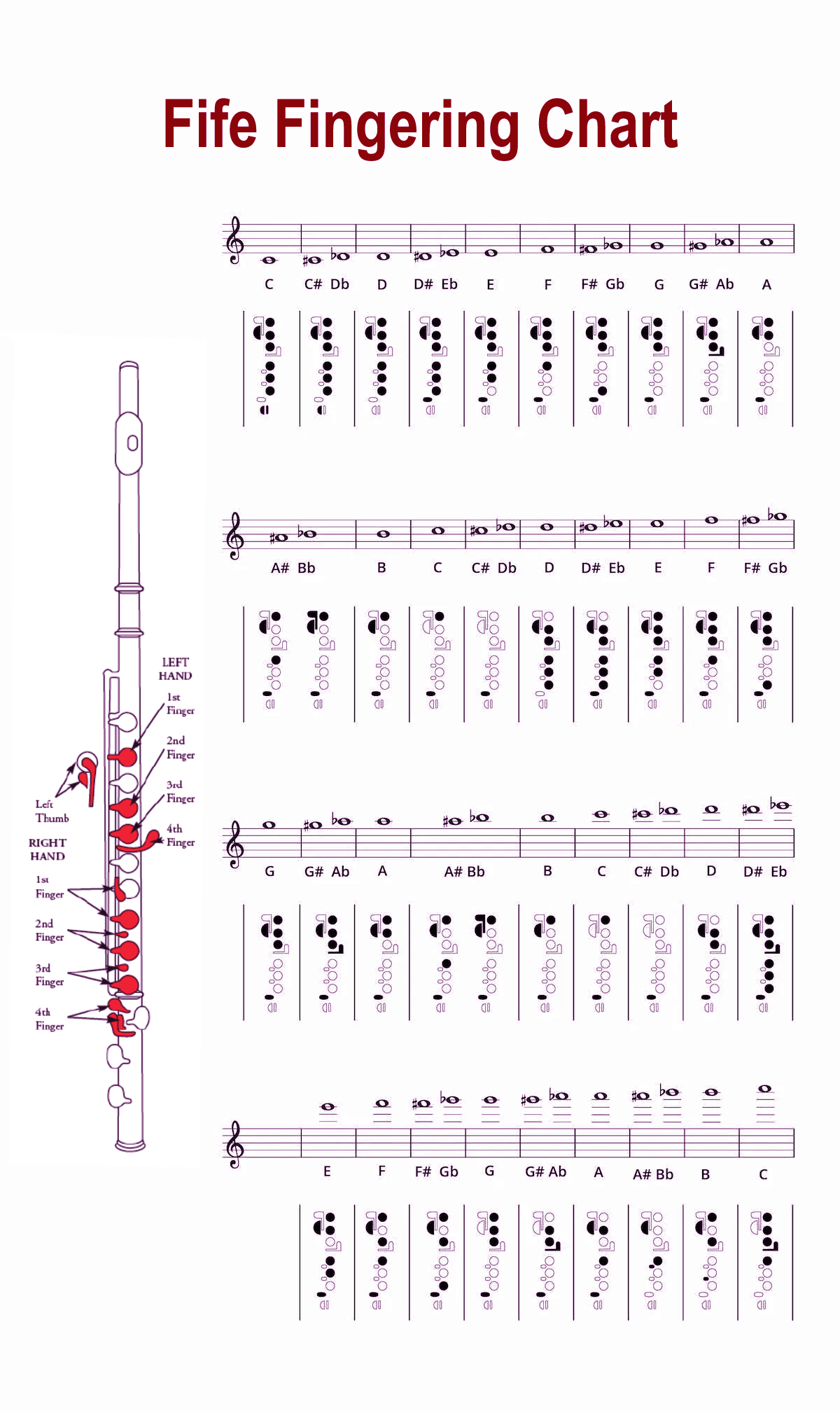
High-quality color PDF perfect for printing and carrying with you. Go to Download Page or open PDF directly: Open PDF
📚 Complete Fife Fingering Guide
For a comprehensive deep-dive into fife fingerings, hole combinations, and advanced techniques, check out our detailed guide:
BEGINNER FIFE FINGERING CHART
(Standard B♭ Fife | 6 Holes)
1. Basic Fingering Combinations
| Note | Hole Pattern | Left Hand | Right Hand | Description |
|---|---|---|---|---|
| D5 | ●●●●●● | 1, 2, 3 | 4, 5, 6 | All holes covered |
| E5 | ●●●●●○ | 1, 2, 3 | 4, 5 | Hole 6 open |
| F#5 | ●●●●○○ | 1, 2, 3 | 4 | Holes 5, 6 open |
| G5 | ●●●○○○ | 1, 2, 3 | - | Holes 4, 5, 6 open |
| A5 | ●●○○○○ | 1, 2 | - | Holes 3, 4, 5, 6 open |
| B5 | ●○○○○○ | 1 | - | Holes 2, 3, 4, 5, 6 open |
| C6 | ○○○○○○ | - | - | All holes open |
Legend: ● = Cover hole, ○ = Open hole. Tip: The same fingering can produce different octaves by changing embouchure and air speed.
2. Essential Beginner Scales
Practice these scales to develop finger dexterity and smooth transitions in the fife's comfortable range.
D Major Scale
D5 (●●●●●●) - E5 (●●●●●○) - F#5 (●●●●○○) - G5 (●●●○○○) - A5 (●●○○○○) - B5 (●○○○○○) - C6 (○○○○○○) - D6 (●●●●●●, octave higher)
G Major Scale
G5 (●●●○○○) - A5 (●●○○○○) - B5 (●○○○○○) - C6 (○○○○○○) - D6 (●●●●●●, octave) - E6 (●●●●●○, octave) - F#6 (●●●●○○, octave) - G6 (●●●○○○, octave)
A Major Scale
A5 (●●○○○○) - B5 (●○○○○○) - C#6 (○○○○○○, half-hole) - D6 (●●●●●●, octave) - E6 (●●●●●○, octave) - F#6 (●●●●○○, octave) - G#6 (●●●○○○, octave) - A6 (●●○○○○, octave)
3. Simple Practice Melodies
(Great for applying new fingerings!)
"Yankee Doodle":
G5 (●●●○○○) - G5 (●●●○○○) - A5 (●●○○○○) - B5 (●○○○○○) - C6 (○○○○○○) - B5 (●○○○○○) - A5 (●●○○○○) - G5 (●●●○○○)
F#5 (●●●●○○) - E5 (●●●●●○) - D5 (●●●●●●) - E5 (●●●●●○) - F#5 (●●●●○○) - G5 (●●●○○○) - G5 (●●●○○○)
"Hot Cross Buns":
B5 (●○○○○○) - A5 (●●○○○○) - G5 (●●●○○○)
B5 (●○○○○○) - A5 (●●○○○○) - G5 (●●●○○○)
G5 (●●●○○○) - G5 (●●●○○○) - G5 (●●●○○○) - G5 (●●●○○○)
A5 (●●○○○○) - A5 (●●○○○○) - A5 (●●○○○○) - A5 (●●○○○○)
B5 (●○○○○○) - A5 (●●○○○○) - G5 (●●●○○○)
4. Fife Fingering Tips for Beginners
- Cover finger holes completely with the pads of your fingers - any gaps will cause airy or squeaky sounds.
- Left hand covers holes 1, 2, 3 (top three holes) with index, middle, and ring fingers.
- Right hand covers holes 4, 5, 6 (bottom three holes) with index, middle, and ring fingers.
- Hold the fife horizontally to your right side, with the embouchure hole at the center of your lips.
- Form a proper embouchure: direct air across the embouchure hole, similar to playing a flute.
- Use steady, focused breath - fife requires controlled air stream for clear tone.
- Practice long tones on each note to develop good tone quality and breath control.
- Start with the middle register (D5-G5) before exploring higher or lower notes.
- Master the octave technique - same fingering can produce different octaves with embouchure changes.
- Keep fingers curved and relaxed - avoid pressing too hard on the holes.
- Practice scales daily to build muscle memory for fingerings.
- Use a mirror to check your embouchure and finger position.
- Listen carefully to your tone and intonation - use a tuner if needed.
- Clean your fife regularly, especially after each practice session.
- Be patient - consistent daily practice yields the best results.
- Start with simple melodies like "Yankee Doodle" before moving to more complex pieces.
Understanding Fife Fingerings
Fife Anatomy and Parts
Before learning fingerings, it's essential to understand the fife's simple construction and how it produces its distinctive high-pitched sound.
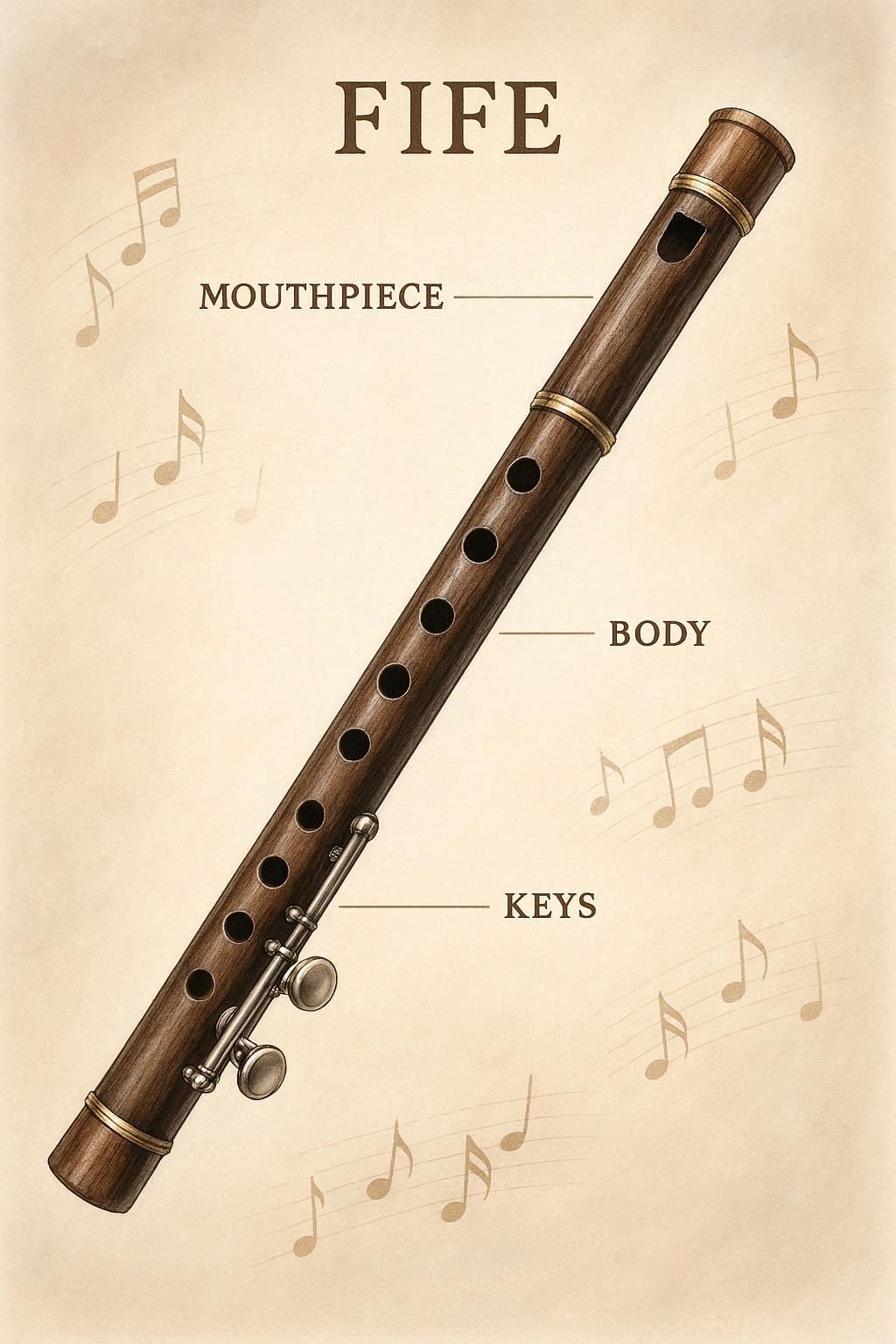
Key Components:
- Body: Single piece of wood or plastic with six finger holes
- Embouchure hole: Small opening where you blow to create sound
- Finger holes (1-6): Six holes that are covered to change pitch
- Material: Traditionally made from hardwoods like rosewood or grenadilla
- Length: Typically 15-16 inches long
- Bore: Narrow cylindrical bore for high-pitched sound
How Finger Holes Change Fife Pitch
The fife has six finger holes that change the effective length of the air column to alter pitch. When you cover holes, you make the instrument longer and lower the pitch. The fife works on the same principle as other woodwind instruments but with a simpler design.
🎼 New to the Fife?
Just starting your fife journey? Our comprehensive guide covers everything from embouchure setup to fingering techniques:
Hole Functions:
- Hole 1: Covered by left index finger
- Hole 2: Covered by left middle finger
- Hole 3: Covered by left ring finger
- Hole 4: Covered by right index finger
- Hole 5: Covered by right middle finger
- Hole 6: Covered by right ring finger
Understanding Musical Notes
Musical notes are organized in a specific pattern. Understanding this pattern is crucial for reading music and learning fingerings.
Want a deeper primer? Read our Music Notes Guide for beginners.
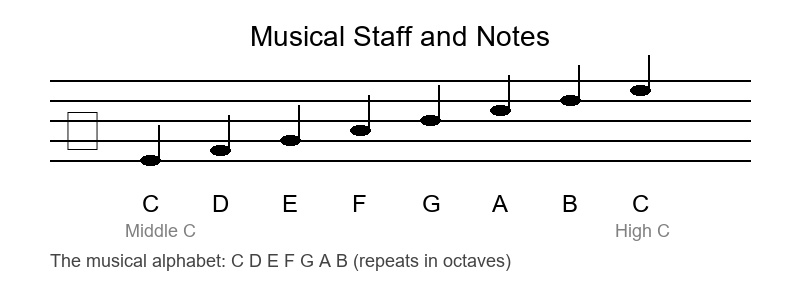
The Musical Alphabet:
Musical notes use the letters A, B, C, D, E, F, G, then repeat. In fife music, the lowest note is typically D5.
- Natural Notes: C, D, E, F, G, A, B
- Sharp (♯): Raises a note by one half step (e.g., F♯)
- Flat (♭): Lowers a note by one half step (e.g., B♭)
Note: The fife is typically pitched in B♭, meaning when you play "C", it sounds as B♭ on piano.
Half Steps and Whole Steps
Understanding the distance between notes is essential for learning scales and fingering patterns.
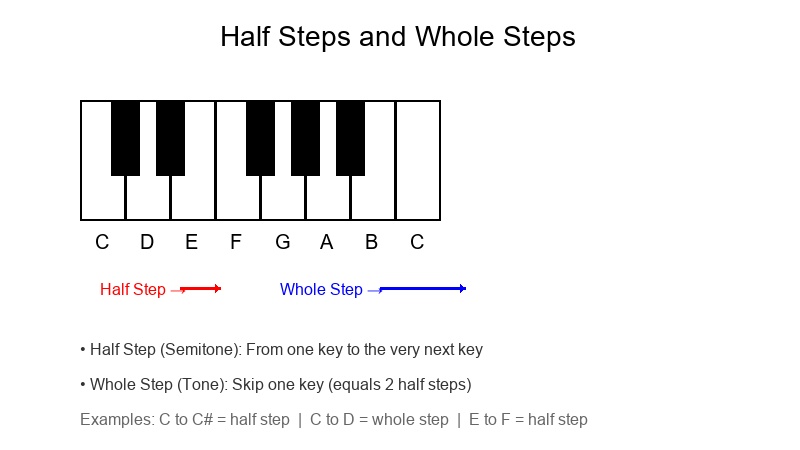
Half Step (Semitone):
The smallest distance between two notes. On a piano, it's from one key to the very next key (including black keys).
Examples:
- E to F
- B to C
- F to F♯
Whole Step (Tone):
Equal to two half steps. Skip one key on the piano.
Examples:
- D to E (2 half steps)
- G to A (2 half steps)
- A to B (2 half steps)
Fife Octaves and Pitch Ranges
An octave is the interval between one note and another with the same letter name but different pitch. The fife typically covers about 2 octaves.
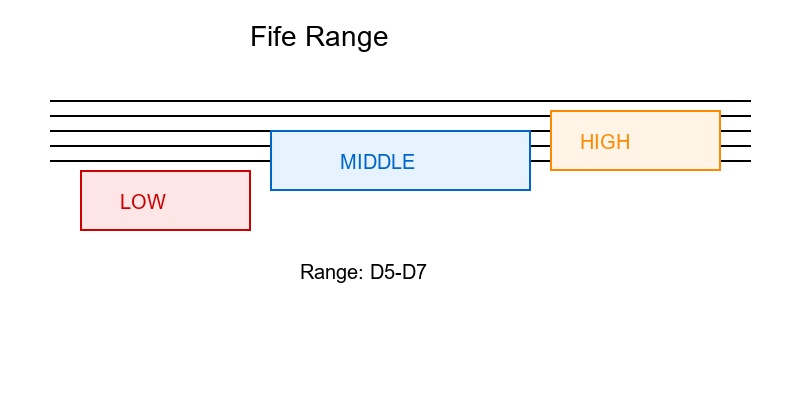
Fife Range:
- Low Register: D5 to G5 (fundamental notes)
- Middle Register: A5 to C6 (most comfortable for beginners)
- High Register: D6 to C7 (requires advanced technique)
Octave Example: D5 to D6 is one octave. Same fingering, different air speed and embouchure.
Common Fife Fingering Combinations Chart
Here are the most frequently used fife fingering combinations. The same fingering can produce different notes depending on your embouchure (lip position and air speed).
| Note | Fingering | Hole Pattern | Description |
|---|---|---|---|
| D (D5) | ●●●●●● | All holes covered | Lowest note |
| E (E5) | ●●●●●○ | Hole 6 open | One whole step up from D |
| F♯ (F♯5) | ●●●●○○ | Holes 5,6 open | Major third from D |
| G (G5) | ●●●○○○ | Holes 4,5,6 open | Perfect fourth from D |
| A (A5) | ●●○○○○ | Holes 3,4,5,6 open | Perfect fifth from D |
| B (B5) | ●○○○○○ | Holes 2,3,4,5,6 open | Major sixth from D |
| C (C6) | ○○○○○○ | All holes open | Major seventh from D |
Tip: Notice how the fingering pattern follows a logical sequence - opening holes from bottom to top raises the pitch!
Harmonic Series on Fife
The fife produces notes based on the harmonic series. With changes in lip tension and air flow, the same fingering can produce different harmonic levels.
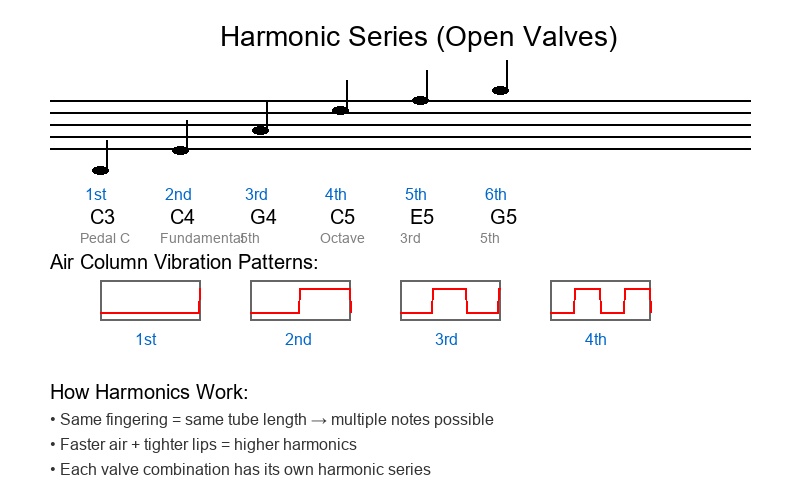
The harmonic series for all holes covered (●●●●●●):
- 1st harmonic: D5 - fundamental, easy to produce
- 2nd harmonic: D6 - octave above D5
- 3rd harmonic: A6 - perfect fifth above D6
- 4th harmonic: D7 - octave above D6
- 5th harmonic: F♯7 - major third above D7
- 6th harmonic: A7 - perfect fifth above D7
Each fingering pattern has its own harmonic series, giving the fife its full range of notes.
How to Hold the Fife Correctly
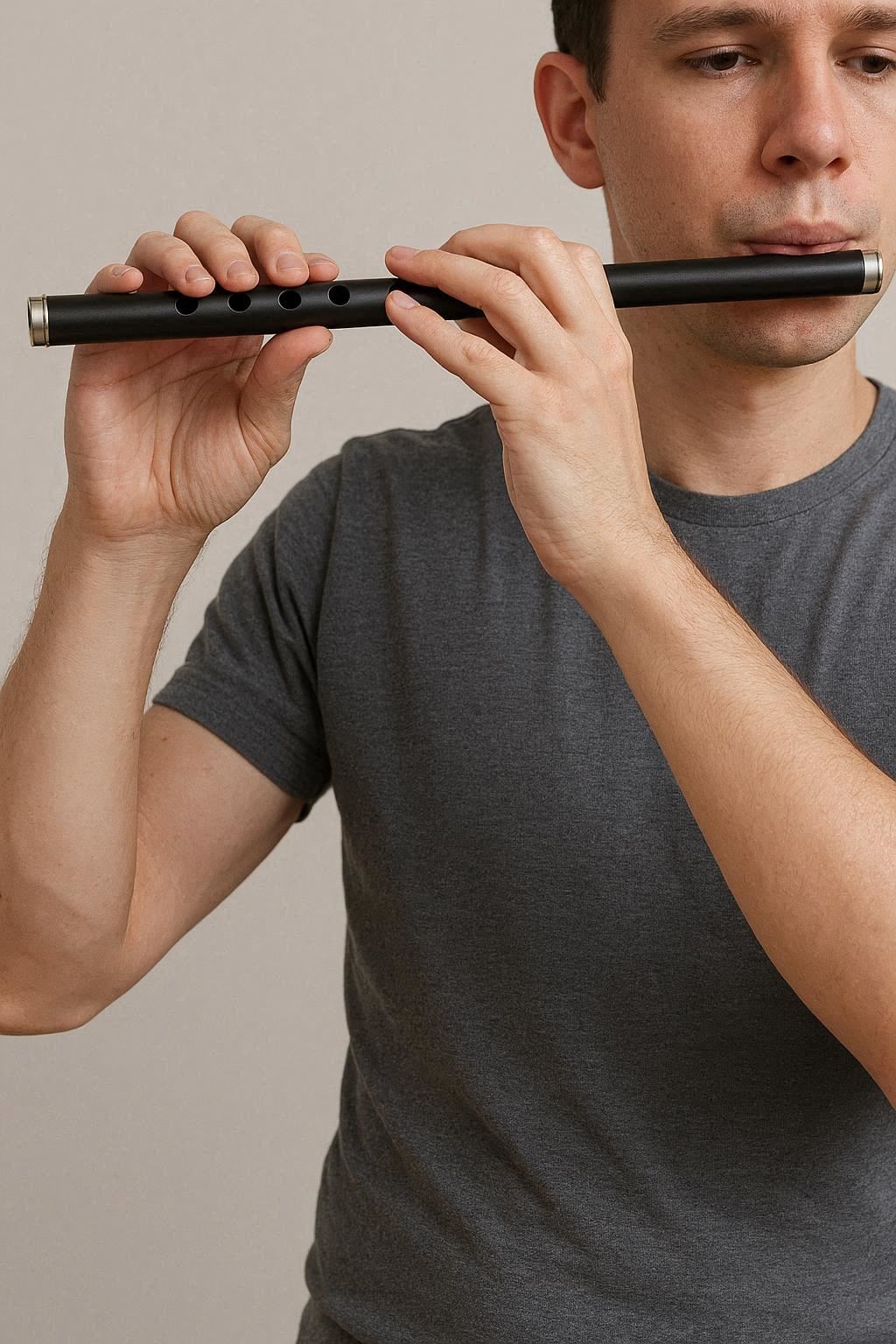
Left hand: covers holes 1, 2, 3 (top three holes) with index, middle, and ring fingers. Right hand: covers holes 4, 5, 6 (bottom three holes) with index, middle, and ring fingers. Hold the fife horizontally to your right side, with the embouchure hole positioned at the center of your lips. Keep your posture straight and shoulders relaxed.
How to Learn to Play the Fife
- Start with basic notes: establish steady breath support and embouchure, focus on middle register (D5-G5).
- Practice fingerings: use the interactive chart above to click through fingerings while practicing sound production.
- Scale practice: work on D major and G major scales to reinforce fingerings and improve intonation.
- Keep fingering chart handy: reference during lessons and practice to avoid developing bad habits.
- Practice simple melodies: like "Yankee Doodle" and "The Star-Spangled Banner" to improve musical flow.
- Expand range: gradually explore higher and lower notes while maintaining relaxation.
- Use interactive tools: utilize this page's interactive chart or other fingering simulators for practice.
Best Beginner Fife Brands and Models
High-value beginner options: Yamaha YRF-21, Gemeinhardt 2SP, Armstrong 104, Eastman ETR420. Before purchasing, check build quality, hole alignment, intonation, and warranty. We recommend trying instruments in person with guidance from a teacher or professional.
Practice Tips and Common Mistakes
- Incorrect hole coverage: ensure holes are completely covered with fingertips, avoid air leaks.
- Too much or too little air pressure: aim for focused air stream, avoid forcing sound.
- Lack of practice structure: set weekly goals (scales, pieces, long tones) and track progress.