
Double Bass Fingering Chart
Interactive first‑position mapping • bass‑clef reading • Simandl 1‑2‑4 • PDF
Interactive Double Bass Fingering Chart
🛠️ How to Use This Chart
Step 1: Set Key Signature
Sharps and flats determine finger spacing patterns in first position.
Step 2: Select a Written Note
See suggested string and finger (0=open; 1‑2‑4 per Simandl) with bass‑clef display.
Step 3: Check Intonation
Use drones and listen for sympathetic resonance with nearby open strings.
Select a Note (First Position, Simandl 1‑2‑4)
Double Bass Fingering Chart Image
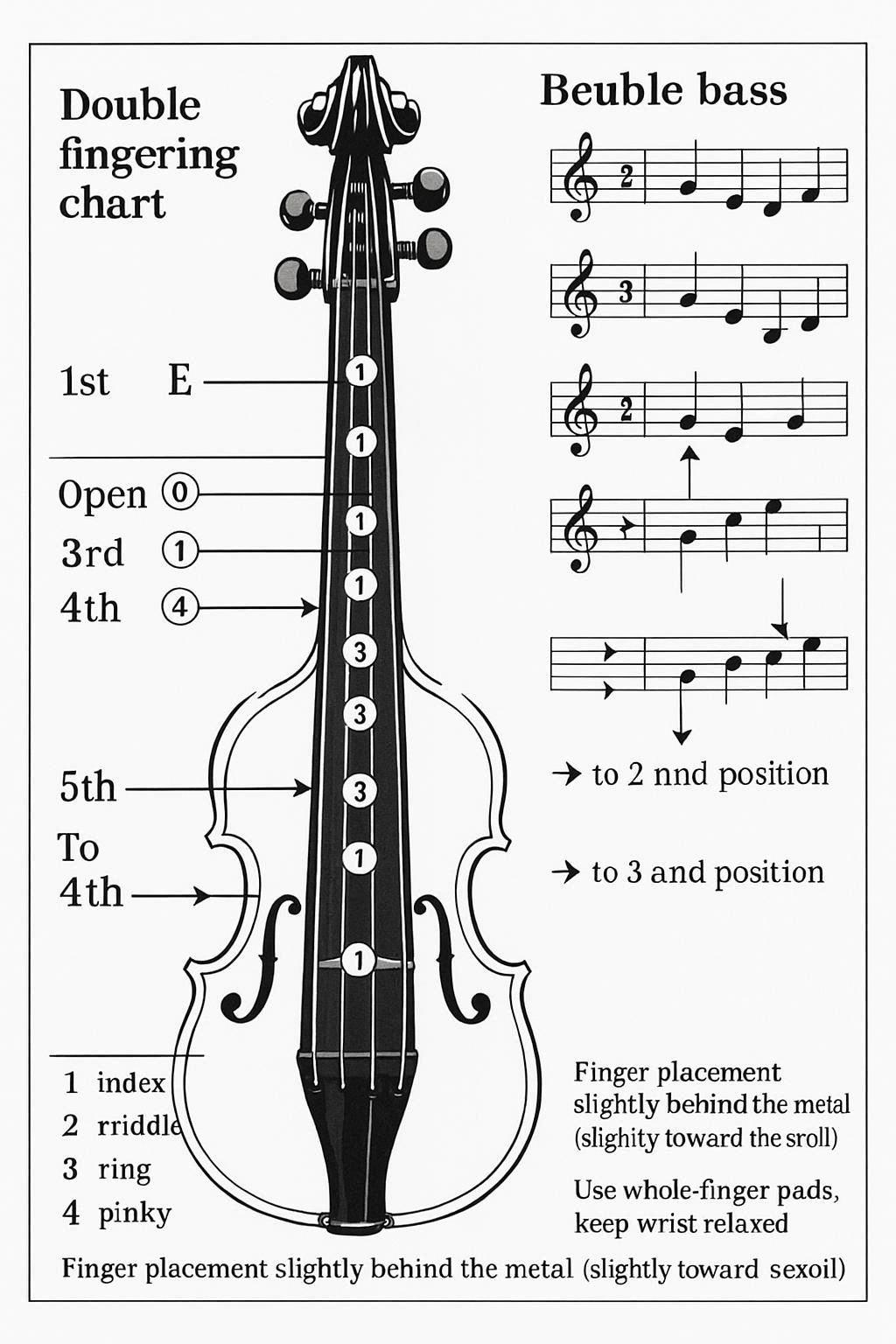
High‑contrast PDF for lessons and practice. Go to Download Page or open PDF directly: Open PDF
🎶 Reading Music
Double bass primarily reads bass clef 𝄢; higher passages can use tenor 𝄡 or treble 𝄞. If you’re new to key signatures/accidentals, review our Music Notes Guide.
Understanding the Double Bass
Tuning and First Position (Simandl)
- Open strings: E1, A1, D2, G2.
- Fingers: 0=open, 1=index, 2=middle, 4=pinky (lower positions typically avoid finger 3).
- Finger spacing: Wider intervals—use arm weight and consistent hand frame.
Intonation Strategies
- Use drones on tonic/dominant; check octaves/fifths with adjacent open strings.
- Left‑hand from base knuckle; thumb relaxed behind neck; elbow supports shifts.
- Common keys: E/A/D/G major; mind F# C# G# patterns and Bb usage in flat keys.
Bowing Essentials
- German/French hold: choose per program; maintain balanced pronation and relaxed fingers.
- Keep bow parallel to bridge; manage contact point for register and dynamics.
- Separate/Slurred bowings: coordinate left‑hand clarity with steady bow speed/weight.
Double Bass Common First‑Position Fingerings (Simandl)
| Written Note | String | Finger | Pattern Tip |
|---|---|---|---|
| F1 | E | 1 | Simandl 1‑2‑4 spacing; keep hand compact |
| F#1/Gb1 | E | 2 | Guide to G1 with 4; keep elbows aligned |
| G1 | E | 4 | Match with open G2 octave laterally |
| A1 | A | 0 | Reference pitch for low position intonation |
Shifting Basics
- Use guide fingers (1→4) and audible slow shifts (practice) to coordinate hand and bow.
- Keep thumb traveling with the hand; reset relaxed hand frame after arrival.
- Practice drones during shifts to learn clean landings on new frames.
Recommended Beginner Double Basses
Select proper size and setup with a teacher/shop. Ensure comfortable string height, stable tuners, responsive bow, and appropriate strings. Popular student lines include Yamaha, Eastman, and Shen.
Practice Tips and Common Issues
- Left‑hand tension: Gentle thumb; palm open; fingers fall from above.
- Bow control: Contact point and speed matched to register and dynamics.
- Rhythm and articulation: Metronome; coordinate bow changes with finger lifts.
- Intonation: Drones and open‑string checks; listen for pure fifths/octaves.
- Daily structure: Open‑string tone → scales (key pattern) → etude → piece → cool‑down.