
Euphonium Fingering Chart
Interactive fingering overview • bass/treble clef reading • downloadable PDF
Interactive Euphonium Fingering Chart
🛠️ How to Use This Chart
Step 1: Choose Key Signature
Select a key to show which notes are sharp/flat for your music.
Step 2: Click a Written Note
Match the note to its valve combination (0=open; 1–4=valves). Band parts may be bass clef concert pitch or brass‑band treble clef transposed.
Step 3: Check Intonation
Use a tuner. 4th‑valve alternates on compensating horns improve low‑range tuning and tone.
Select a Note (BB♭ Euphonium)
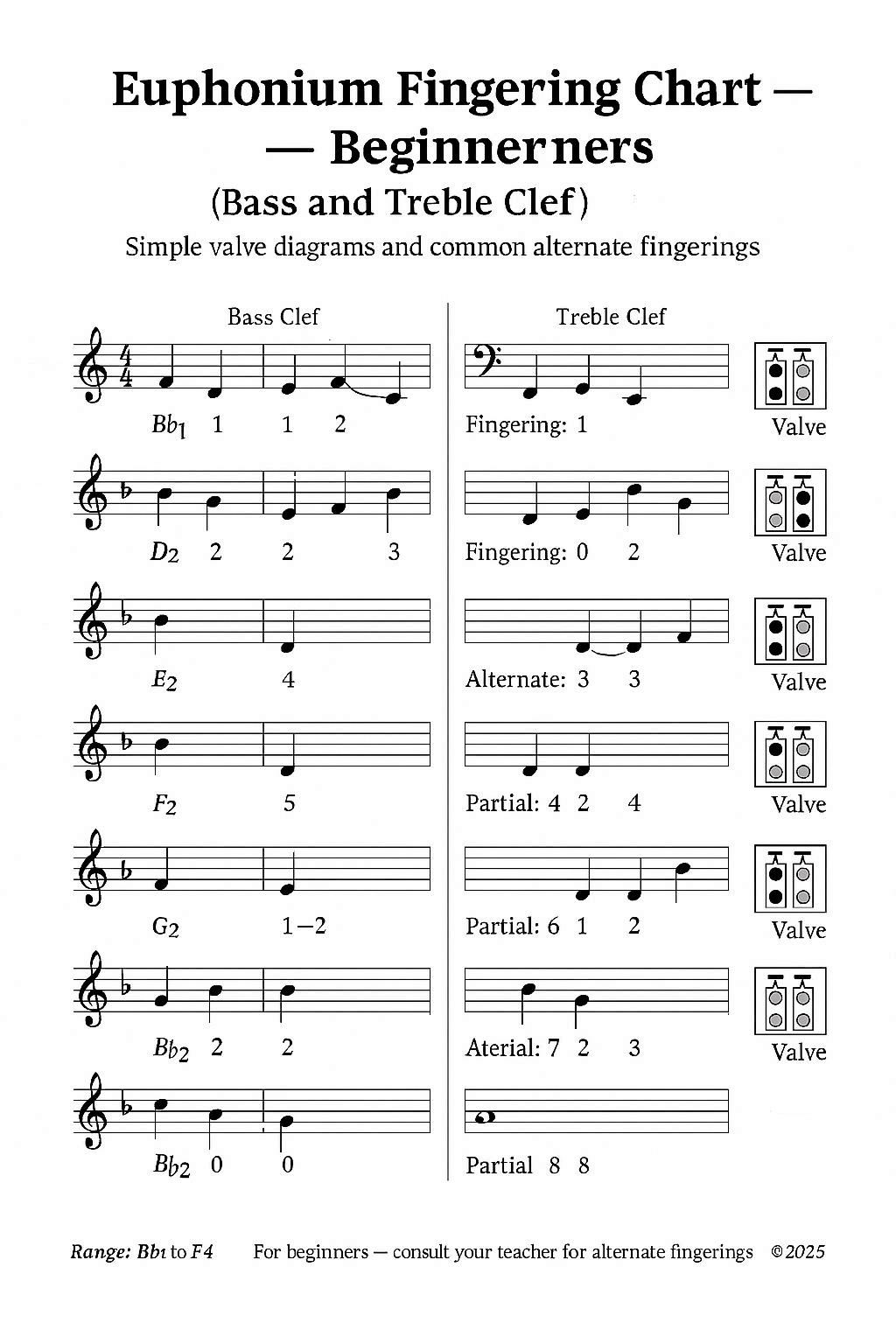
4 Valve Euphonium Fingering Chart Image
3 Valve Euphonium Fingering Chart Image
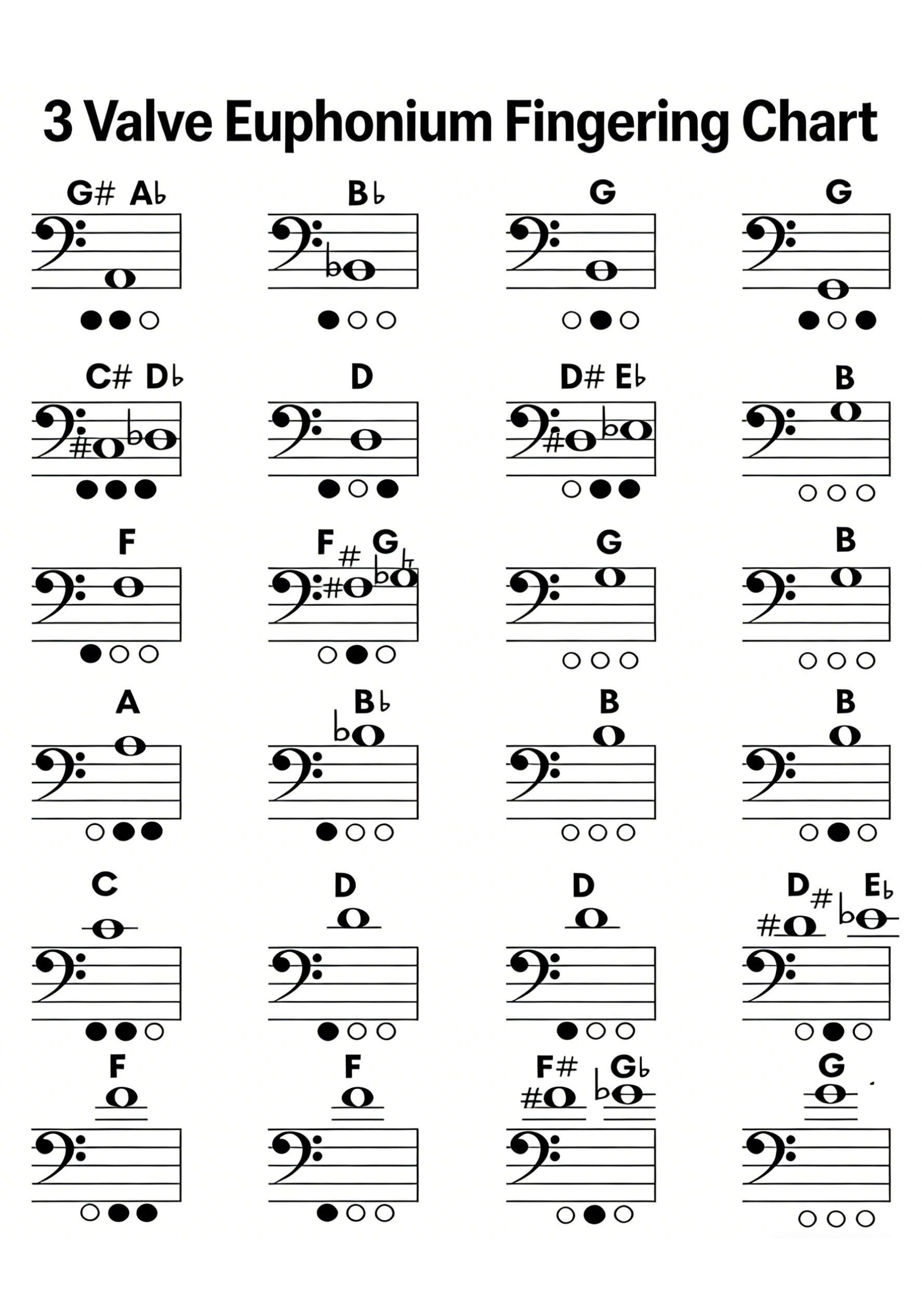
High‑quality color PDF perfect for printing and carrying with you. Go to Download Page or open PDF directly: Open PDF
📚 Complete Euphonium Fingering Guide
For compensating‑system basics, 4th‑valve usage, and intonation strategies, see the full guide.
Understanding Euphonium Fingerings
Euphonium Anatomy and Parts
The euphonium uses a conical bore and often 3+1 compensating valves to lengthen tubing and lower pitch. Its warm, lyrical tone blends with low brass while retaining solo presence.
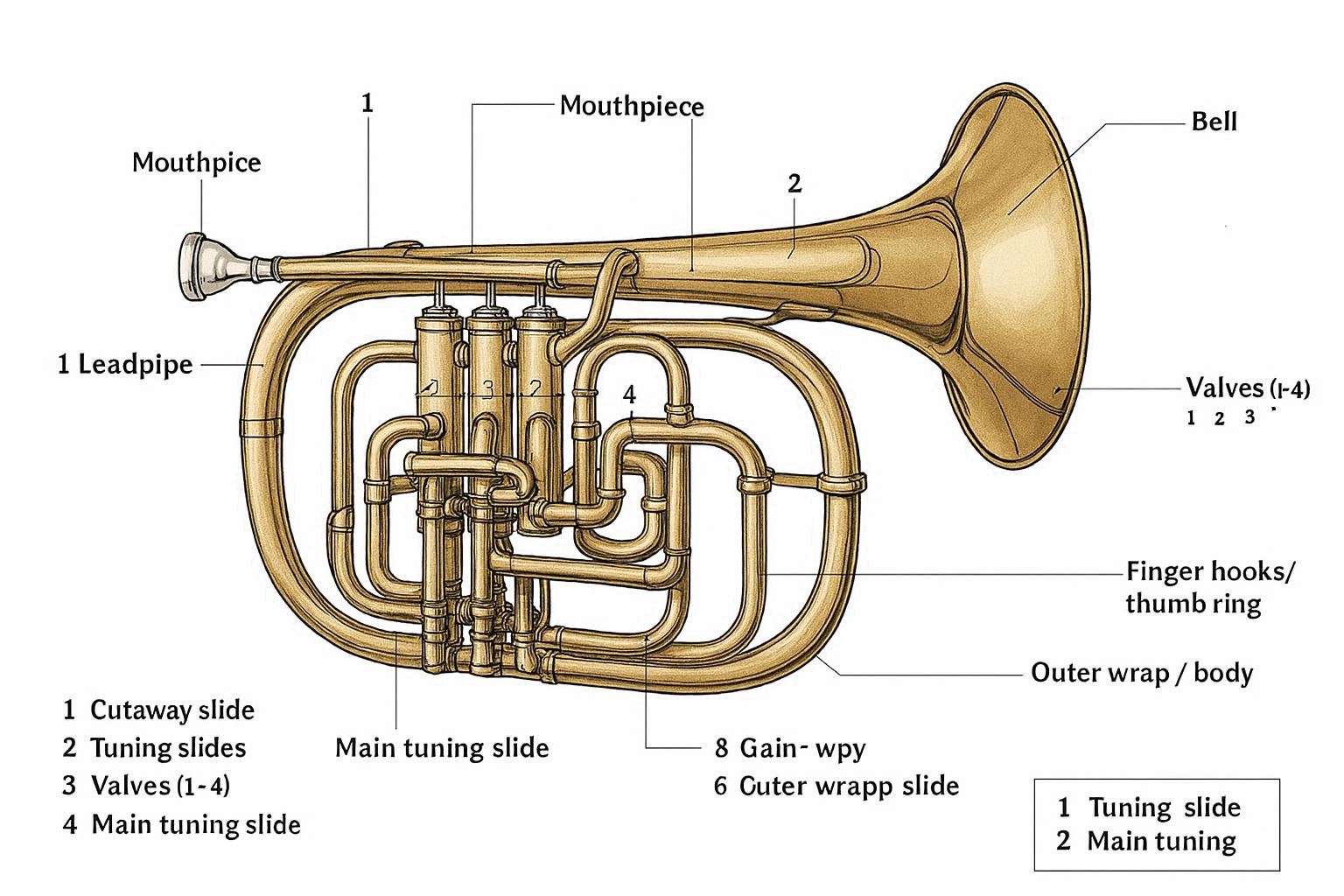
Key Components:
- Mouthpiece: Deep cup for rich low‑frequency response
- Leadpipe: Connects mouthpiece to valve block
- Valves (3+1/4): Compensating systems improve low‑register intonation
- Valve slides: Fine‑tune intonation per circuit
- Main tuning slide: Global pitch control
- Bell: Projects and shapes timbre
How Valves Change Pitch
Valve 1 ≈ whole step, Valve 2 ≈ half step, Valve 3 ≈ minor third; 4th valve = perfect fourth. On compensating horns, 4th + others routes extra tubing for accurate low‑range intonation.
🎶 Bass vs Treble Clef
Concert band parts are usually bass‑clef concert pitch; brass‑band parts are treble‑clef transposed. This chart shows concert pitch in bass clef.
New to note reading? Read our Music Notes Guide.
Common Euphonium Fingering Combinations
| Note | Fingering | Valve Combination | Use/Comment |
|---|---|---|---|
| B♭ (Bb2) | 0 | Open | Home pitch; tune with drone |
| C (C3) | 1‑3 or 4 | First+Third or Fourth | 4 improves intonation |
| D (D3) | 1‑2 | First+Second | Alt 3 for tendencies |
| E♭ (Eb3) | 1 | First | Slide adjust if flat |
| F (F3) | 0 | Open | Stable mid‑range |
| G (G3) | 1‑2 | First+Second | Center with steady air |
| B♭ (Bb3) | 0 | Open | One octave above Bb2 |
Tip: On compensating horns, use 4th‑valve combinations for accurate low C/B/Bb.
Harmonic Series on Euphonium
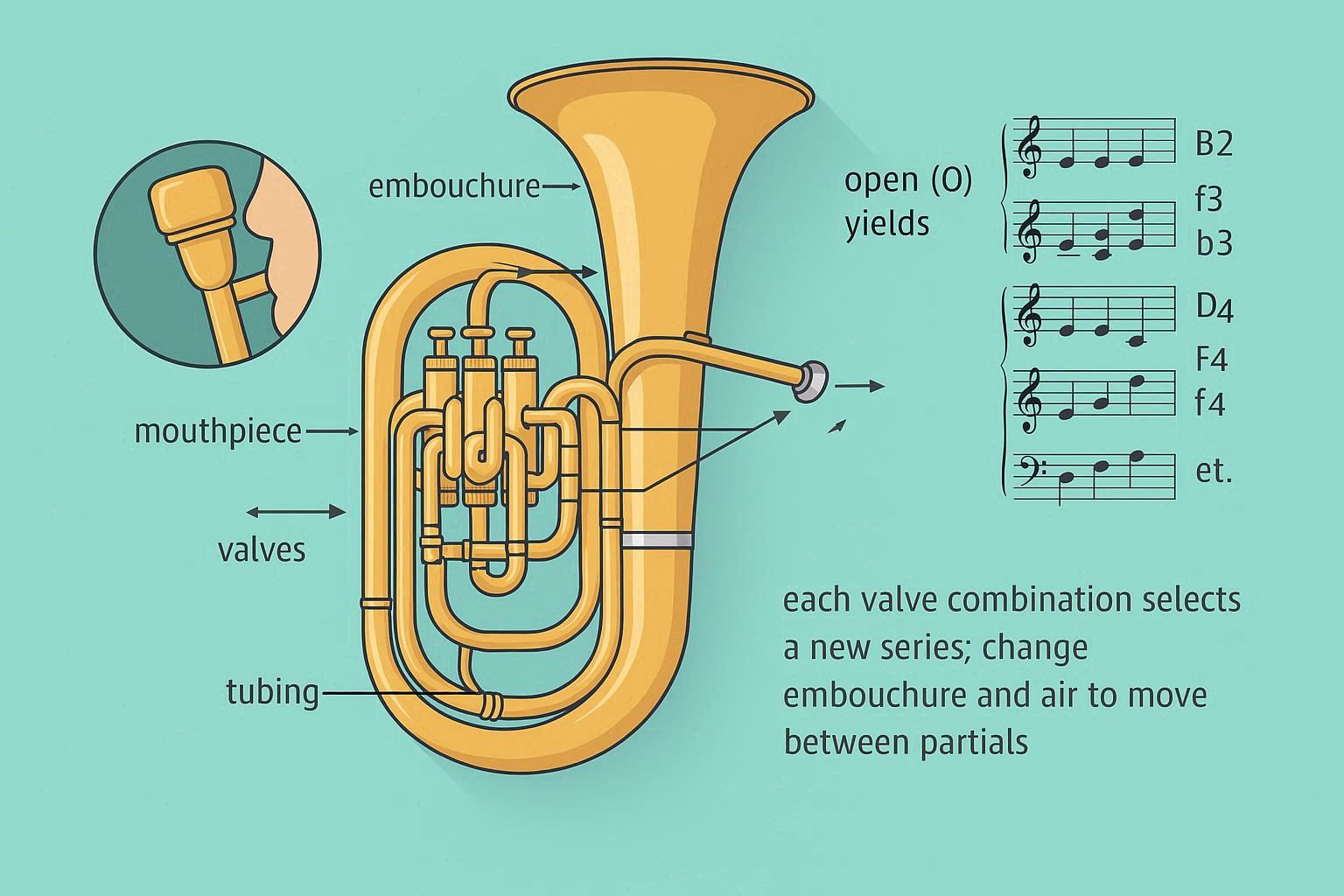
Open (0) yields Bb2, F3, Bb3, D4, F4, etc. Each valve combination selects a new series; change embouchure and air to move between partials.
How to Hold the Euphonium
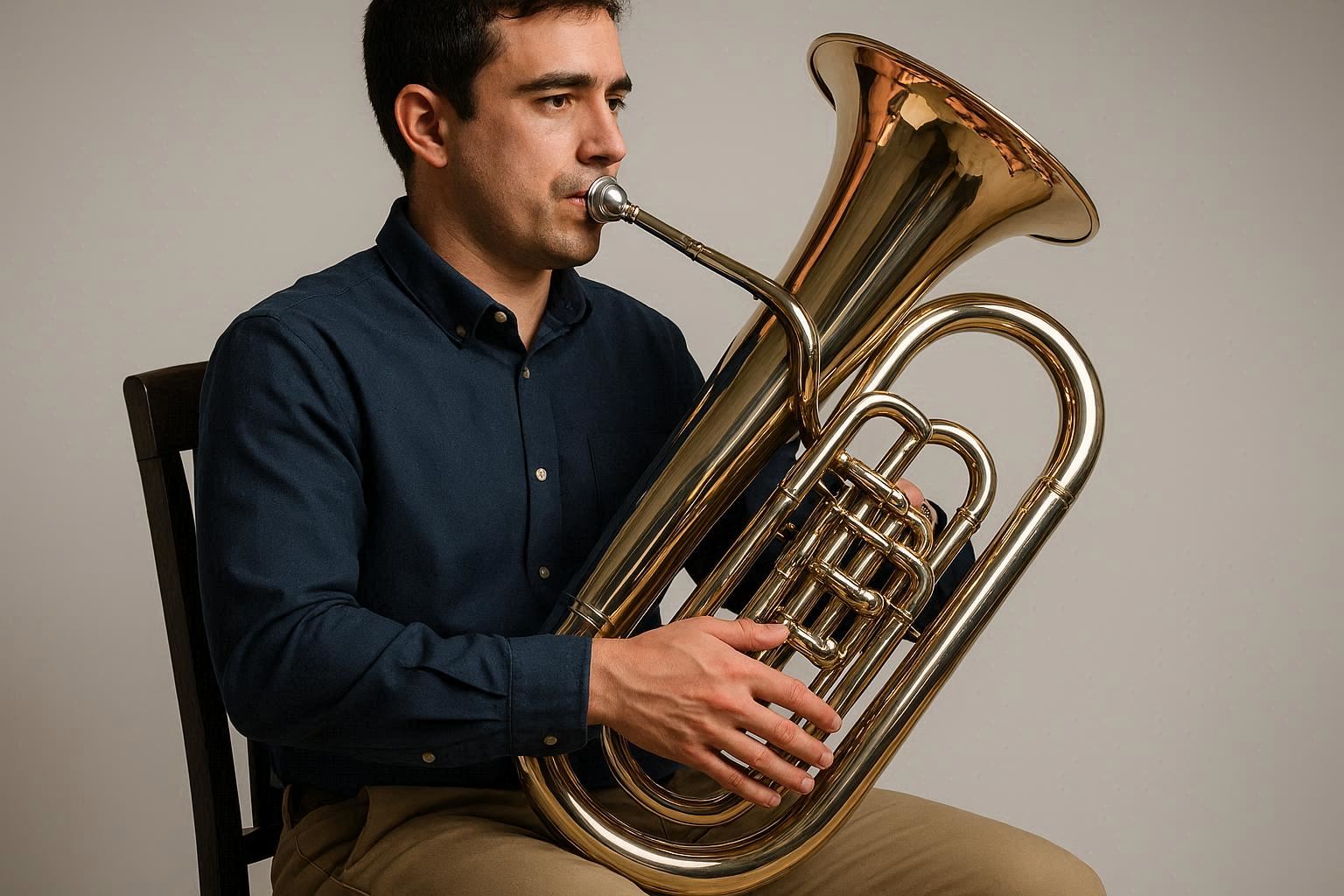
Bring the instrument to you—avoid collapsing the torso. Support comfortably; align mouthpiece to embouchure. Right hand relaxed over valves; left arm stabilizes. Keep shoulders loose and breath pathway open.
How to Learn to Play the Euphonium
- Mid‑register long tones (Bb2–F3) for resonance and breath control.
- Slow lip slurs across 0, 1, 2, 1‑2, 2‑3, 1‑3/4 patterns.
- Scales in Bb, F, Eb, C with drone + metronome.
- 4th‑valve usage for low tuning; memorize alternates on compensating horns.
- Ensemble role: lock with bass voices; prioritize core tone and clean articulation.
Best Beginner Euphonium Models
Dependable options include Yamaha YEP‑321/642, Jupiter JEP1000/1120, Eastman EEP‑526, and Besson student lines. Inspect valve compression, slide fit, ergonomics, weight balance, and compensating system (if present). Test with a teacher when possible.
Practice Tips and Common Mistakes
- Air and support: Warm, steady air; avoid forcing volume up high.
- Valve timing: Quiet, simultaneous motion to avoid slur bumps.
- Intonation: Use alternates/4th‑valve; manage slides thoughtfully.
- Posture: Neutral head/neck; bring horn to you.
- Structure: Daily: long tones → slurs → scales → repertoire → cool‑down.