
Baritone Horn Fingering Chart
Interactive fingering overview • bass/treble clef reading • downloadable PDF
Interactive Baritone Horn Fingering Chart
🛠️ How to Use This Chart
Step 1: Choose Key Signature
Select a key to reveal which notes are sharp or flat.
Step 2: Click a Written Note
Match the note to its valve combination (0=open; 1–4=valves). Band parts may be in bass or transposed treble clef.
Step 3: Check Intonation
Use a tuner. 4th‑valve alternates often yield better low‑range tuning and tone.
Select a Note (BB♭ Baritone)
Baritone Horn Fingering Chart Image
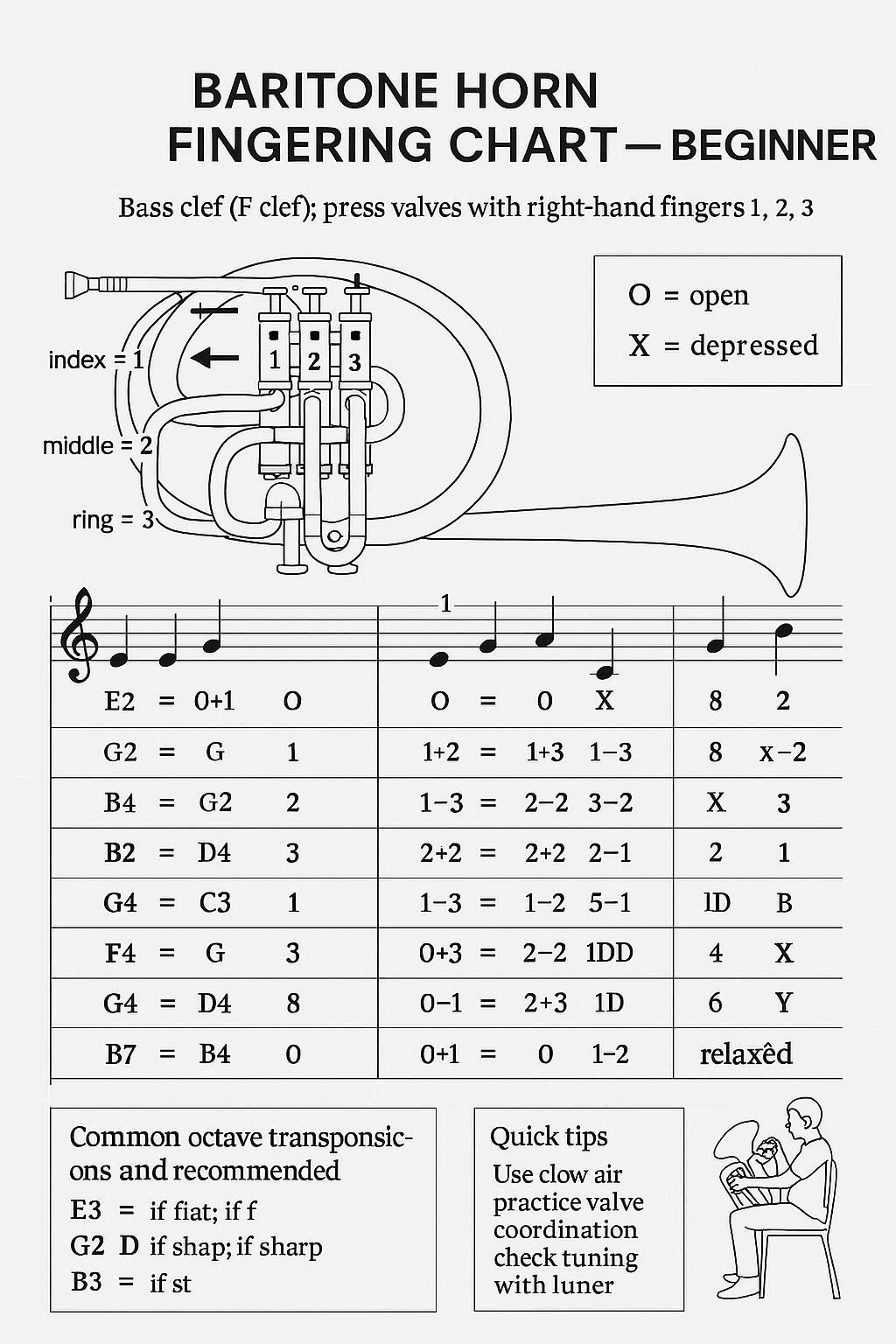
High‑quality color PDF perfect for printing and carrying with you. Go to Download Page or open PDF directly: Open PDF
📚 Complete Baritone Horn Fingering Guide
For alternate fingerings, 4th‑valve usage, and ensemble tuning strategies, see the full guide.
Understanding Baritone Horn Fingerings
Baritone Anatomy and Parts
The baritone uses a mostly cylindrical bore and typically three piston valves (sometimes four) to lengthen tubing and lower pitch. Its tone sits between trombone and euphonium; bore and bell size shape projection and color.
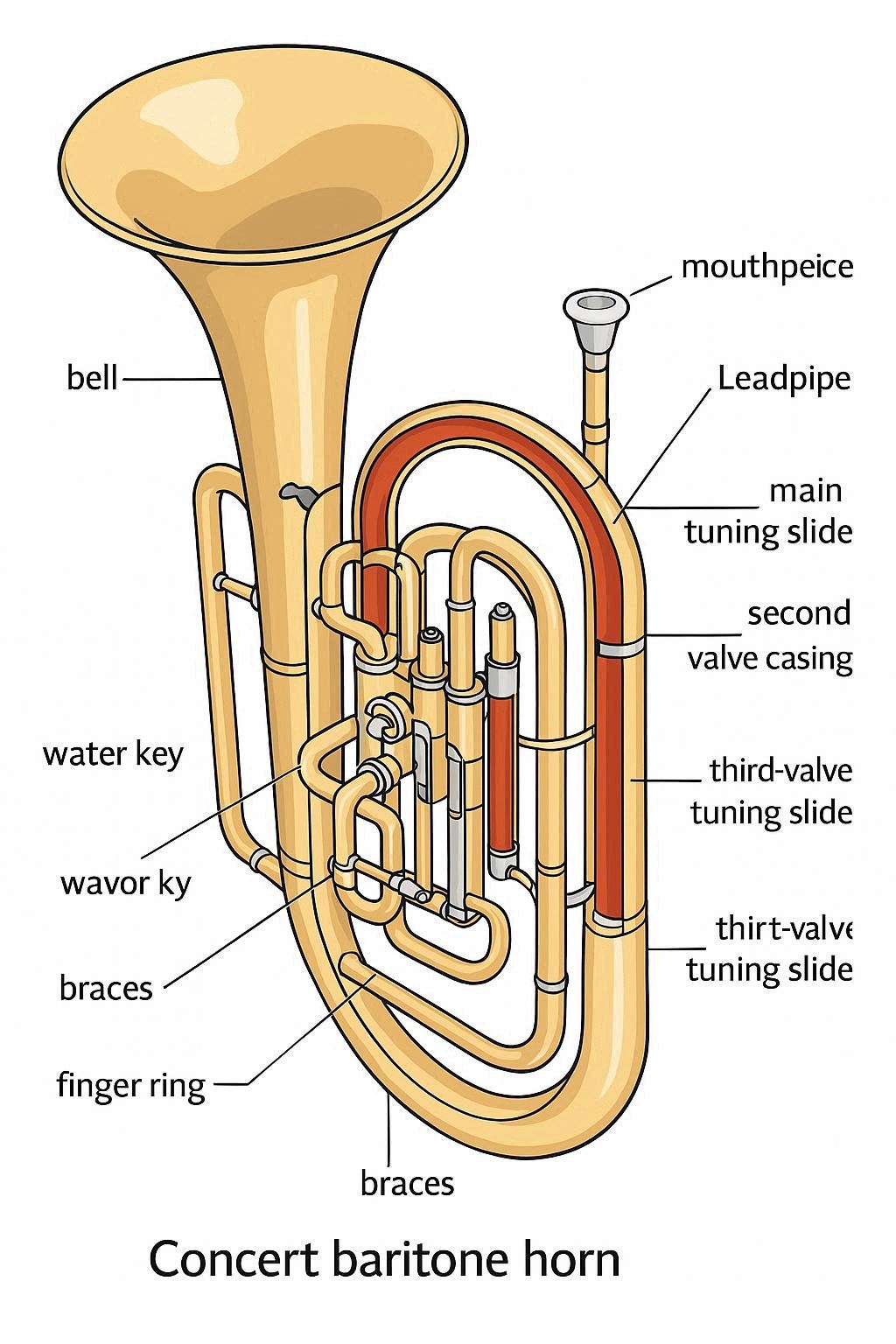
Key Components:
- Mouthpiece: Medium‑deep cup balancing response and warmth
- Leadpipe: Connects mouthpiece to valve block
- Valves (1–3/4): Piston valves lengthen tubing
- Valve slides: Per‑circuit tuning
- Main tuning slide: Overall pitch control
- Bell: Directs and shapes sound
How Baritone Valves Change Pitch
Valve 1 ≈ whole step, Valve 2 ≈ half step, Valve 3 ≈ minor third; optional 4th = perfect fourth. Prefer 4 over 1‑3/1‑2‑3 in low register for better intonation and response.
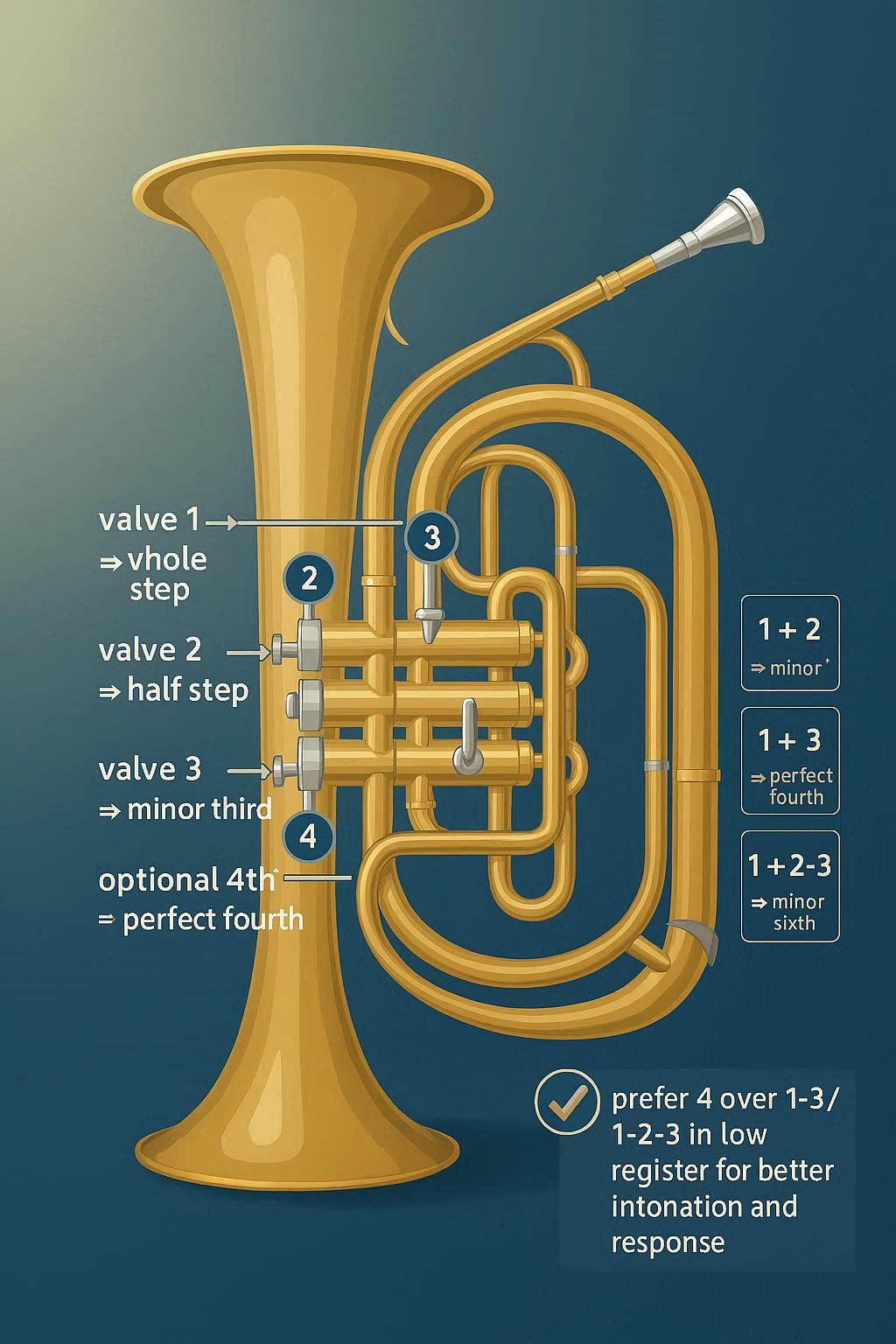
Valve down = longer tube = lower pitch
🎶 Bass vs Treble Clef
Baritone parts appear in bass clef at concert pitch; in brass bands, treble‑clef transposed parts are common. This chart shows concert pitch in bass clef.
New to note reading? Read our Music Notes Guide.
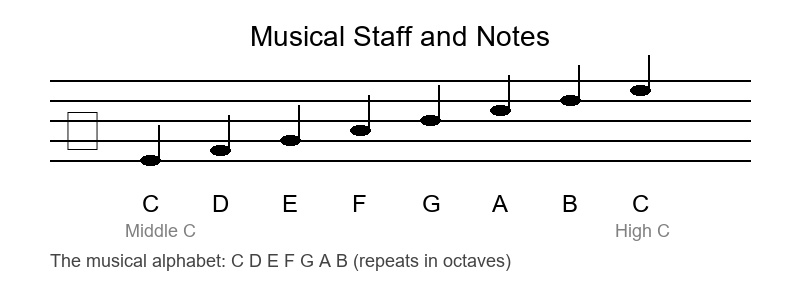
Understanding Musical Notes
Notes repeat across octaves. Valve tendencies differ by horn; use tuner and drones to center pitch while adopting efficient fingerings.
Range and Registers (BB♭ Baritone)
Work primarily in B♭2–G3 for core tone and reliable intonation; expand outward gradually.
- Low: E2–B♭2 — warm air; consider 4th‑valve options if available
- Middle: B♭2–G3 — most stable for ensemble work
- Upper: A3–B♭4+ — focused air; avoid overblowing
Common Baritone Horn Fingering Combinations
| Note | Fingering | Valve Combination | Use/Comment |
|---|---|---|---|
| B♭ (Bb2) | 0 | Open | Home pitch; tune with drone |
| C (C3) | 1‑3 or 4 | First+Third or Fourth | 4 improves intonation |
| D (D3) | 1‑2 | First+Second | Alt 3 for tendencies |
| E♭ (Eb3) | 1 | First | Slide adjust if flat |
| F (F3) | 0 | Open | Stable mid‑range |
| G (G3) | 1‑2 | First+Second | Center with steady air |
| B♭ (Bb3) | 0 | Open | One octave above Bb2 |
Tip: Adopt efficient fingerings early; confirm with tuner and adjust slides for context.
Harmonic Series on Baritone
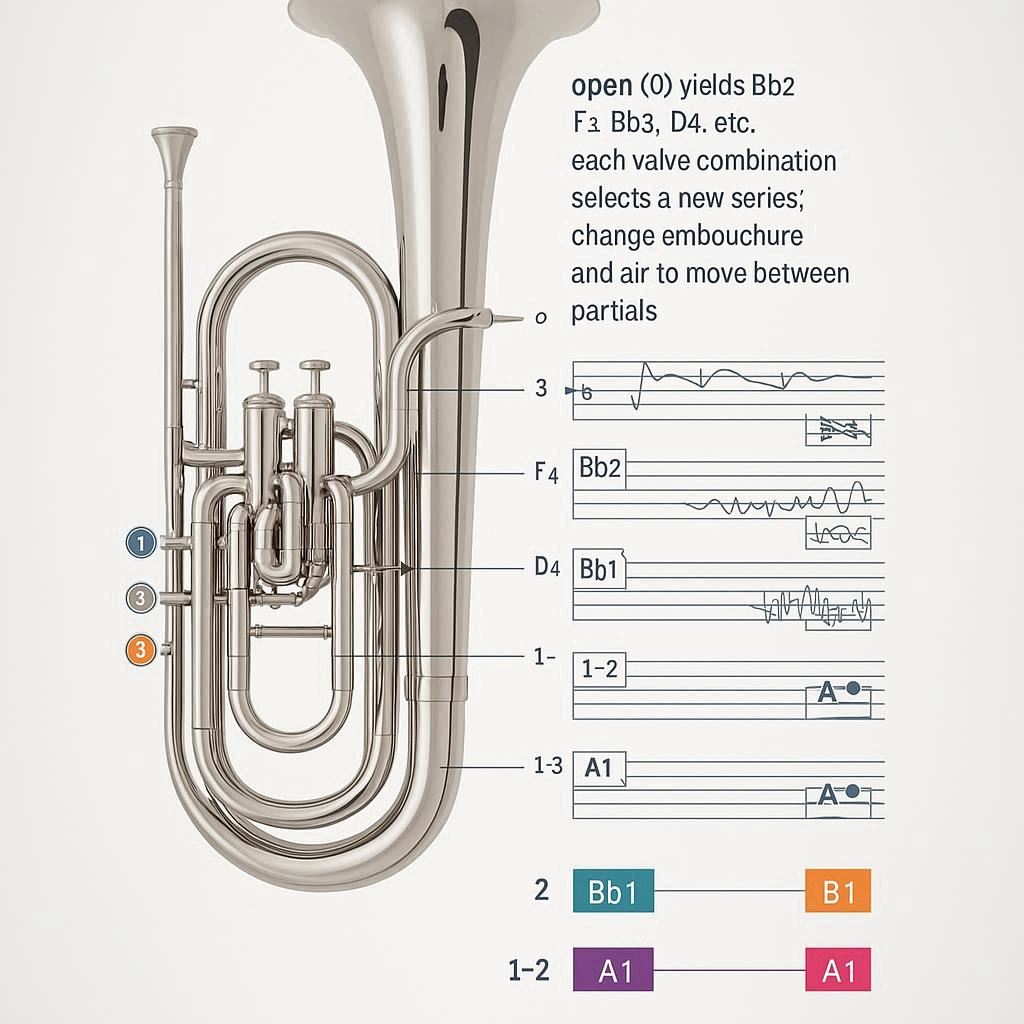
Open (0) yields Bb2, F3, Bb3, D4, F4, etc. Each valve combination selects a new series; change embouchure and air to move between partials.
How to Hold the Baritone Horn
Bring the instrument to you—avoid collapsing the torso. Support comfortably on the lap; align mouthpiece to embouchure. Right hand relaxed over valves; left arm stabilizes. Keep shoulders loose and breath pathway open.
How to Learn to Play the Baritone Horn
- Mid‑register long tones (Bb2–F3) for resonance and breath control.
- Slow lip slurs across 0, 1, 2, 1‑2, 2‑3, 1‑3/4 patterns.
- Scales in Bb, F, Eb, C with drone + metronome.
- 4th‑valve usage (if available) for C/B/Bb low tuning; memorize alternates.
- Ensemble role: lock with bass voices; prioritize core tone and clean articulation.
Best Beginner Baritone Models
Dependable options include Yamaha YBH‑301/621, Jupiter JBR730, and Eastman EBR‑321。Check valve compression, slide fit, ergonomics, and balance. Test with a teacher when possible.
Practice Tips and Common Mistakes
- Air and support: Warm, steady air; avoid forcing volume up high.
- Valve timing: Quiet, simultaneous motion to avoid slur bumps.
- Intonation: Use alternates; manage slides thoughtfully.
- Posture: Neutral head/neck; bring horn to you.
- Structure: Daily: long tones → slurs → scales → repertoire → cool‑down.