
Want to start learning music but struggling with self-doubt about "insufficient hand-eye coordination"? Worried about the time and financial costs of offline courses, and also concerned that the instrument will be left unused due to the difficulty of getting started? Many music enthusiasts' "enlightenment journey" often ends at the professional barrier of the entry stage. In fact, the core of learning an instrument is not talent, but the scientific choice of "beginner-friendly" instruments—there's no need to stick to traditional high-difficulty instruments like the piano or violin. Choosing the right type for absolute beginners can quickly build a sense of learning achievement and smoothly enter the world of music.
Based on four core dimensions—simplification of instrument structure, learning feedback cycle, physical adaptability, and scene compatibility—this article selects 5 types of cost-effective and fast-result self-learning instruments, with professional learning points and cost analysis, to help absolute beginners accurately start their music journey.
Are you struggling to figure out which instrument is the easiest to learn? Check out this "entry-level" difficulty ranking!
| No. | Instrument Name | Difficulty Description |
|---|---|---|
| 1 | Kalimba | No pressure for absolute beginners, no need to read music. You can play simple melodies in 5 minutes with visualized note names, making it the lowest entry barrier. |
| 2 | Blues Harmonica | No need for complex tongue techniques, focusing on breath control and hole positioning. You can master basic melodies in 3 days, portable and easy to practice. |
| 3 | Ukulele | 4-string simplified design, only 5-6 common chords. You can switch proficiently in 1-2 days and achieve complete singing with accompaniment in half a month. |
| 4 | Djembe Drum | No need for intonation control, only 3-4 core rhythm patterns. You can get started by auditory imitation and synchronize with music accompaniment in 7 days. |
| 5 | Acoustic Guitar (Simplified Version) | Need to master 3-4 core chords, avoiding fingerstyle difficulty and focusing on singing with accompaniment. You can achieve synchronized singing with accompaniment in half a month, and need to pay attention to choosing the right guitar model to avoid pitfalls. |
1. Ukulele: The Preferred Entry-Level String Instrument, Build Strumming & Singing Skills in 14 Days
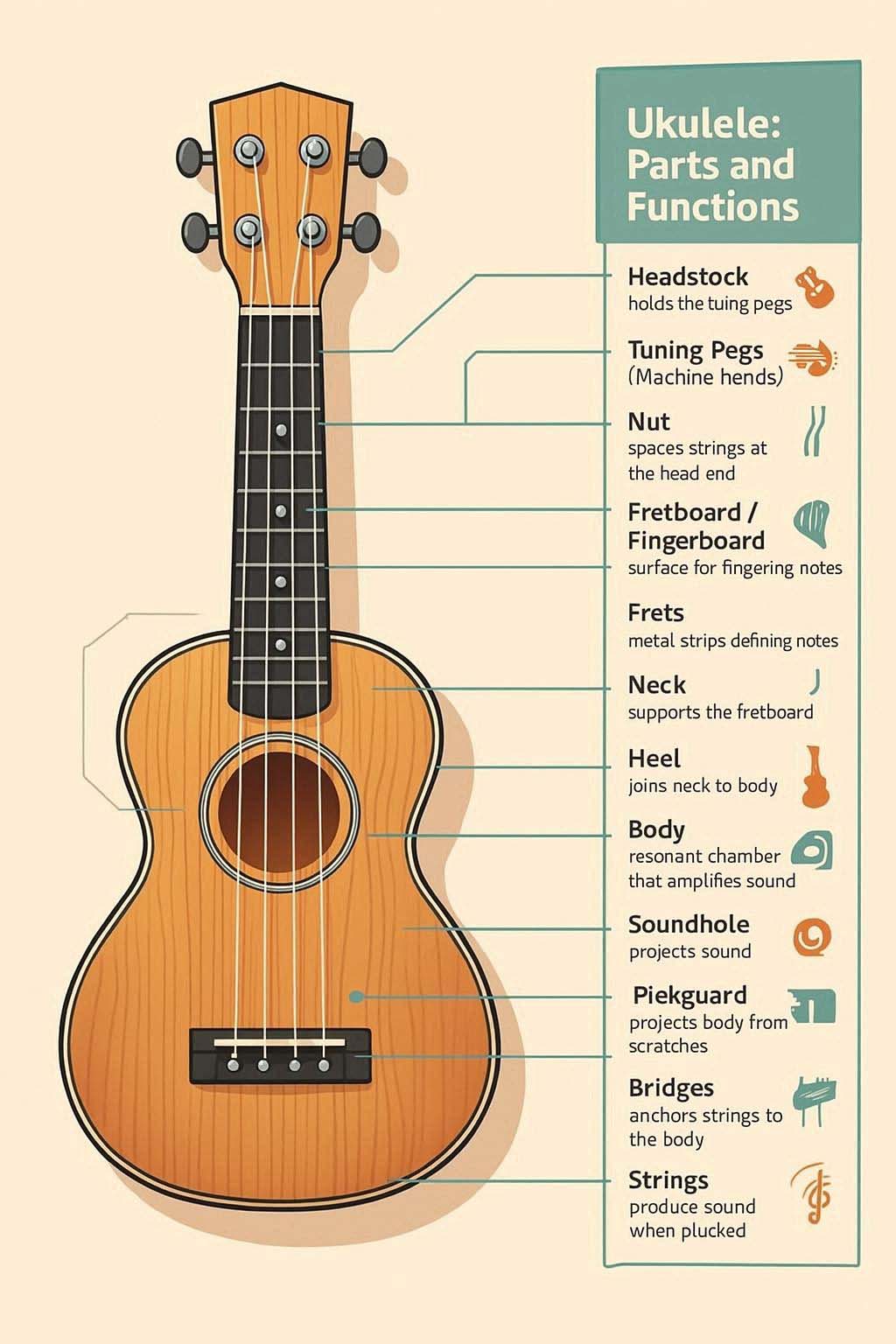
As a small plucked instrument originating from Hawaii, the ukulele has become a benchmark for absolute beginners due to its lightweight structure and simplified range. Its crisp and bright tone can also quickly enhance the pleasure of learning. From a musicological perspective, its entry advantage stems from the natural simplification of its structural design, making it an ideal carrier for beginners to establish a sense of string instrument performance. Check out our Ukulele Fingering Chart for detailed finger positions and learning resources.
▶ Professional Entry Logic
Adopting a 4-string design (2 fewer strings than a guitar), it simplifies the chord fingering system. There are only 5-6 core common chords (such as C, G, Am, etc.), among which the basic C chord only requires pressing a single string. You can achieve smooth switching through 1-2 days of muscle memory training. The mainstream sizes of the ukulele are 21 inches (travel size) and 23 inches (standard size), which are ergonomically designed. Female learners and those with small hands can hold it easily, and the pressure required to press the strings is more than 30% lower than that of a guitar.
▶ Learning Path and Feedback
There is a complete system of high-quality online tutorials available, covering everything from holding posture and plucking techniques to chord progressions. It is recommended to start with slow-tempo pop songs (such as "Let It Be" by The Beatles or "Hallelujah" by Leonard Cohen). These songs have repetitive and simple chord arrangements, allowing you to adapt to the melody in usually 7 days and achieve complete singing with accompaniment in 14 days. The short learning feedback cycle effectively enhances motivation.
▶ Cost and Scene Adaptability
Entry-level laminate ukuleles are available on the market for an average of $30-$80, and there's no need to pursue solid wood models. Professional advice: Prioritize models with a string height of 2.0-2.2mm to reduce the difficulty of pressing strings. Suitable for various scenarios such as home practice, outdoor performances, and gatherings with friends. It not only serves as a stress reliever but also has social attributes, and its performances are highly adaptable for sharing on social media.
2. Kalimba: Visualized Note Design, Get Started in 5 Minutes with Zero Foundation
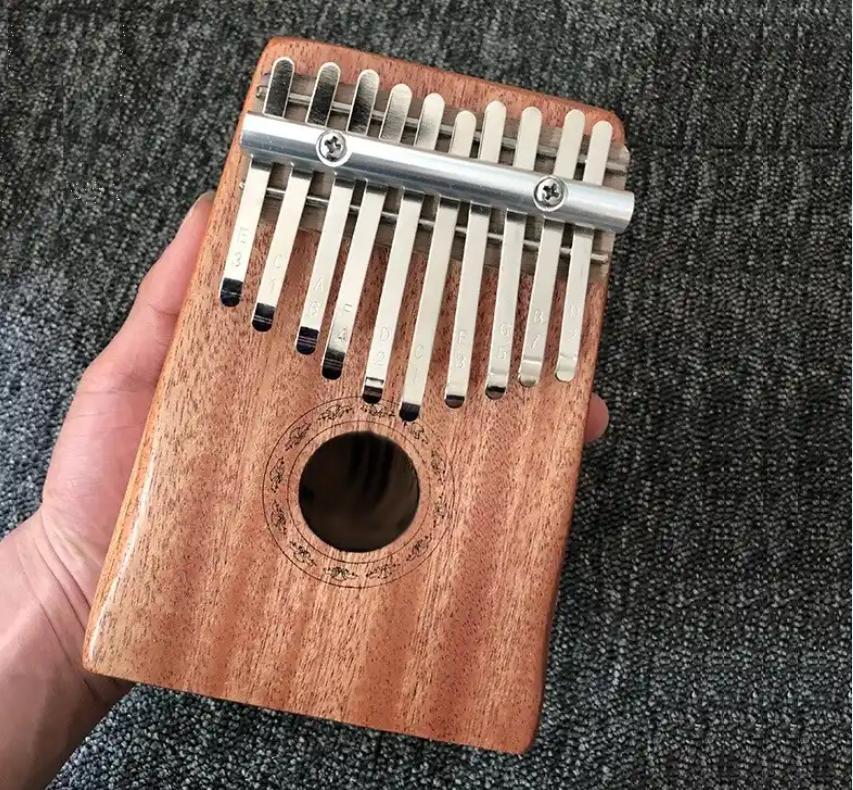
Also known as the "thumb piano", the kalimba has become an instrument that can be learned without music theory foundation due to its advantage of visualized note names. Its crystal-like tone has a healing property, suitable for fragmented time learning, and is a shortcut to establishing a sense of pitch.
▶ Professional Entry Logic
The number of keys is controlled between 17-21, covering the core range of the midrange. It uses thumb plucking to produce sound, eliminating the need for complex finger coordination training. The note names (do, re, mi, etc.) are directly marked on the keys, enabling a direct correspondence between "sheet music and keys" and avoiding the intermediate step of reading music required for traditional instruments. For absolute beginners, by locating the note names, you can complete the performance of simple melodies such as "Twinkle Twinkle Little Star" and "Happy Birthday" within 5 minutes.
▶ Learning Path and Feedback
There's no need for chord training; the core learning focus is on controlling plucking strength and maintaining rhythm stability. 10 minutes of fragmented practice every day can improve your skills. Within a week, you can master the melody performance of popular songs such as "Someone Like You" by Adele or "Shape of You" by Ed Sheeran. The learning feedback efficiency is much higher than that of traditional instruments.
▶ Cost and Scene Adaptability
Entry-level kalimbas average $15-$45. It is recommended to choose models with a key spacing of ≥12mm to improve touch accuracy. The product usually weighs no more than 300g and is portable, suitable for various scenarios such as commuting breaks and home relaxation. Its healing tone has a positive effect on emotional regulation, making it especially suitable for students and office workers.
3. Blues Harmonica: The Benchmark for Entry-Level Wind Instruments, Master Melody Playing in 72 Hours
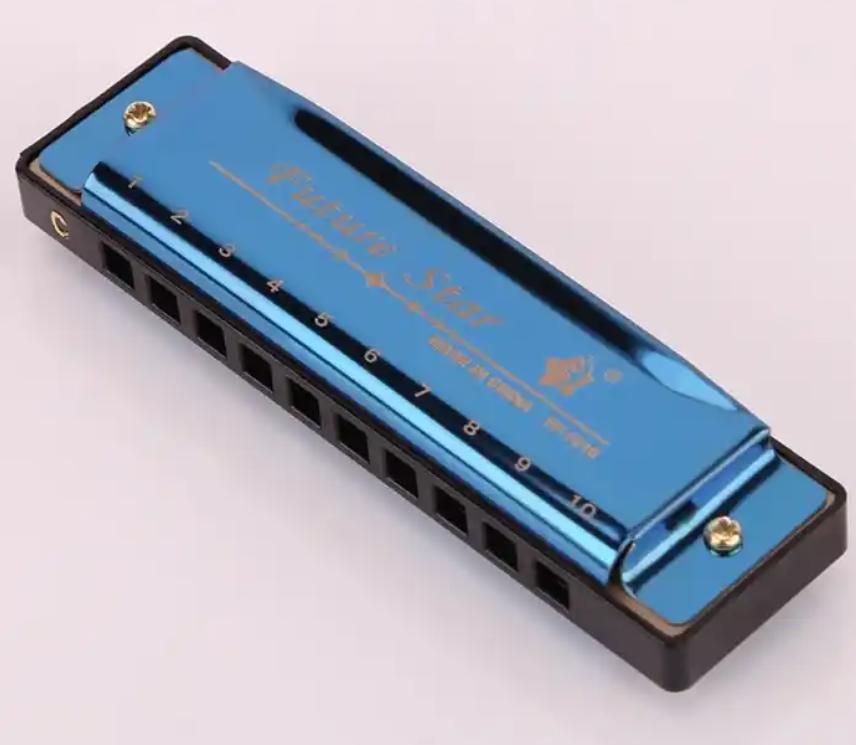
As a simplified type of woodwind instrument, the blues harmonica (10-hole harmonica) has become a preferred choice for absolute beginners due to its portability and ease of playing single-note melodies. Compared with tremolo harmonicas, it avoids the requirement of complex tongue techniques, focusing on breath control and intonation, making it an efficient carrier for establishing a sense of wind instrument performance.
▶ Professional Entry Logic
Adopting a 10-hole single-note structure, the core playing method is single-note melody expression, without the need to master harmony playing skills. The key to getting started is to establish the coordination between "hole positioning" and "abdominal breathing"—when covering the holes, ensure the tightness between the mouth and the holes. Using abdominal breathing (instead of thoracic breathing) can effectively avoid dizziness, a common problem for beginners. It is recommended for beginners to start with the C key, as its range is suitable for most popular melodies, reducing the difficulty of intonation control.
▶ Learning Path and Feedback
The focus of the basic stage is on training breath stability and accurate hole positioning. You can master the complete performance of simple melodies such as "Oh Susanna" and "Amazing Grace" within 3 days. Its tone has a unique narrative quality—slow-tempo songs exude a gentle texture, while fast-tempo songs show vivid vitality. You can form the embryonic form of your personal playing style through 1-2 weeks of practice.
▶ Cost and Scene Adaptability
Entry-level blues harmonicas average $8-$30. Prioritize models with brass reeds to improve tone stability and durability. The product is only about 10cm in size, which can be easily put into a pocket, allowing "practice anytime, anywhere". Suitable for various scenarios such as solo stress relief and outdoor performances, it is a cost-effective portable instrument.
4. Acoustic Guitar (Simplified Version): Entry with Strumming & Singing Orientation, Quickly Master Core Chord System
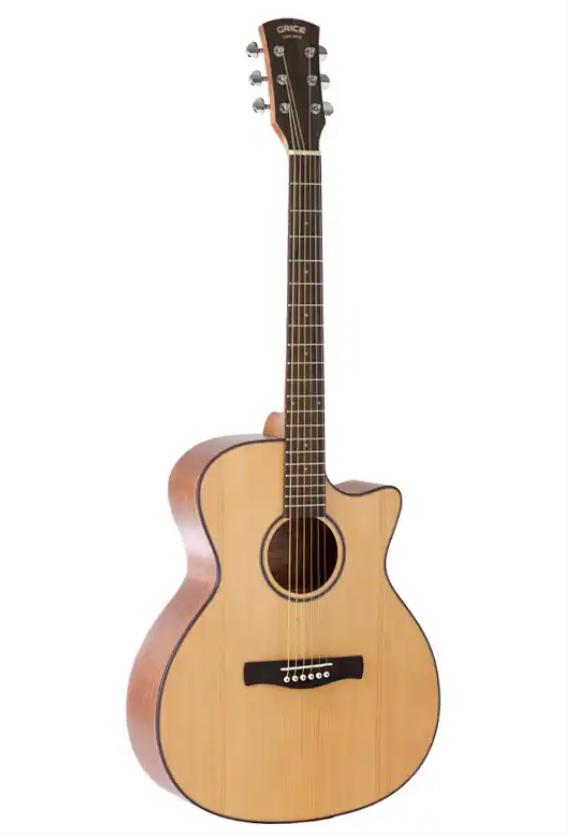
Most absolute beginners' "fear of difficulty" with guitars stems from confusing the learning goals of "singing with accompaniment" and "fingerstyle solo". From a professional teaching perspective, focusing on a simplified learning path for singing with accompaniment can greatly reduce the entry barrier, making the guitar a practical and expressive self-learning instrument. Check out our Guitar Fingering Chart for detailed finger positions and learning resources.
▶ Professional Entry Logic
Adopt a simplified learning system focusing on "accompaniment first", avoiding difficult fingerstyle techniques and focusing on training 3-4 core chords (C, G, Am, F). This chord combination can cover the arrangement needs of dozens of popular songs such as "Knockin' on Heaven's Door" by Bob Dylan and "Let Her Go" by Passenger. The choice of guitar size should match your physical conditions: men are recommended to use 41-inch standard guitars (with good resonance effect), while women and teenagers are recommended to use 38-inch or 39-inch small-sized guitars, which can reduce the pressure of pressing strings and holding the guitar.
▶ Pitfall Avoidance Guide and Learning Feedback
At the entry stage, you need to avoid "low-quality beginner guitars" (market average $15-$30). Such guitars have excessively high string height (usually >3mm), which easily causes finger pain and intonation deviation. It is recommended to choose standard laminate guitars priced at $80-$150 with a string height of 2.3-2.5mm. Through systematic chord switching training, you can achieve synchronized singing with accompaniment for basic songs within 15 days, and establish rhythm stability and emotional expression ability within 30 days.
▶ Cost and Scene Adaptability
Entry-level standard laminate guitars cost $80-$150. Supporting accessories such as a tuner, spare strings, and a guitar bag need to be purchased, and the total cost can be controlled within $180-$220. Suitable for various scenarios such as home practice, outdoor singing with accompaniment, and small-scale social performances, it is one of the most practical self-learning instruments.
5. Djembe Drum: Preferred Entry-Level Percussion Instrument, Quickly Establish Rhythm Perception
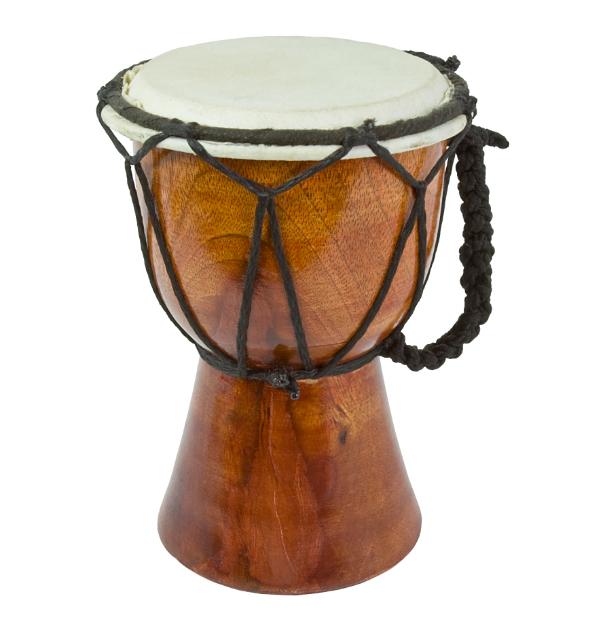
For absolute beginners who focus on rhythm experience rather than melody performance, the djembe drum is the best choice due to its simplified rhythm system and intuitive performance feedback. From a music education perspective, percussion instruments are the basic carrier for establishing a sense of rhythm, and the design characteristics of the djembe drum have greatly reduced the professional barrier of rhythm learning.
▶ Professional Entry Logic
The core performance focuses on 3-4 basic rhythm patterns (such as "boom-da-la-boom-da"). Rhythm changes are achieved through combinations of strikes with different parts of the palm (palm center, palm edge, fingertips), without the need for precise intonation control. The diameter of the drumhead is usually 10 inches or 12 inches (preferred for home use), with a high fault tolerance rate in the striking area. Even if you don't hit the center area accurately, you can still get stable tone feedback, reducing the psychological pressure on beginners.
▶ Learning Path and Feedback
Adopt a learning model of "auditory imitation + muscle memory". By practicing with a music metronome, you can establish basic rhythm stability in 3 days and achieve synchronized accompaniment with popular music in 7 days. The physical sound production characteristics of percussion instruments have a natural emotional release function, which has a positive effect on relieving anxiety and improving concentration.
▶ Cost and Scene Adaptability
Entry-level djembe drums average $50-$120. It is recommended to choose models with adjustable drumhead tension to facilitate adjusting the tone according to performance needs. Suitable for scenarios such as home relaxation, group performances, and outdoor activities. It can form an ensemble with ukuleles, guitars, and other instruments, enhancing the sense of participation in music socializing.
Conclusion: The Core of Self-Learning an Instrument is a "Achievement-Driven" Scientific Path
The essence of music learning is not to pursue professional performance standards, but to achieve self-expression and emotional regulation through the interaction between instruments and music. For absolute beginners, the key to self-learning is to choose suitable "low-threshold, high-feedback" types, build learning confidence through short-term skill improvement, and then gradually deepen music cognition.
There's no need to be constrained by the inherent perception of "being clumsy" or "lacking talent". All the above 5 types of instruments can achieve skill improvement through 10-20 minutes of fragmented practice every day. Choose the type that matches your interests and scene needs, follow the scientific entry path, and you can easily start your own music journey.