
If you've been browsing recorder options, you've probably stumbled across the terms "Baroque fingering" and "German fingering." At first glance, these two varieties look nearly identical—both are eight-hole soprano recorders with that familiar three-section construction. But the differences underneath the surface matter more than most beginners realize. Choosing the wrong one can mean re-learning fingerings from scratch when you eventually pick up an alto, or struggling through half the songs in a music book because your finger chart doesn't match your instrument.
This guide cuts through the confusion. We'll look at how these systems actually work, what makes them different, and crucially—which one will serve you better depending on where your recorder journey takes you.
The Short Answer First
If you want to skip the details: Baroque fingering is the international standard used by professionals, in conservatories, and across virtually all ensemble literature. German fingering is a simplified variant designed for young children in German-speaking school systems during the mid-20th century—it makes the earliest notes easier but creates serious limitations down the road.
The general advice from most recorder teachers goes like this: if you're an adult, or if a child shows genuine interest beyond the first few months, start with Baroque fingering. The initial learning curve is slightly steeper on F (the fourth note most methods introduce), but you avoid the much harder pivot later on.
What Makes Baroque Fingering and German Recorder Look Different
The two systems are visually distinguishable, though the differences are subtle enough that many buyers miss them entirely.
The Hole Sizes Give It Away
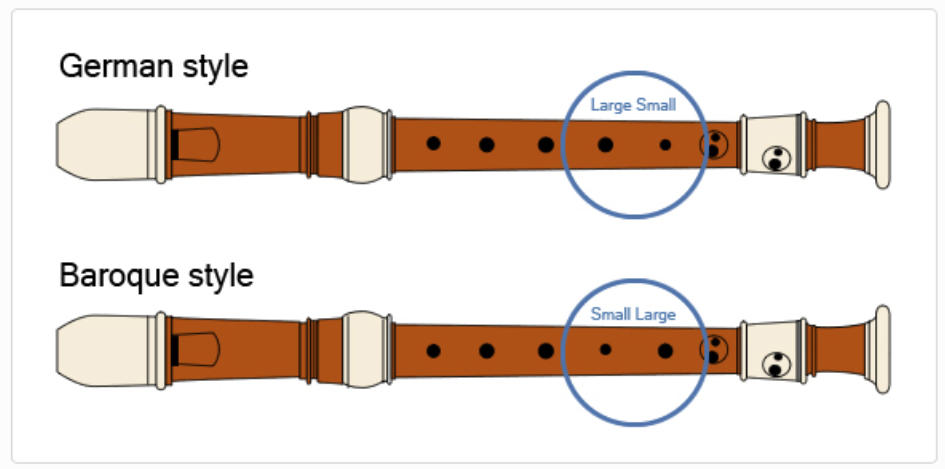
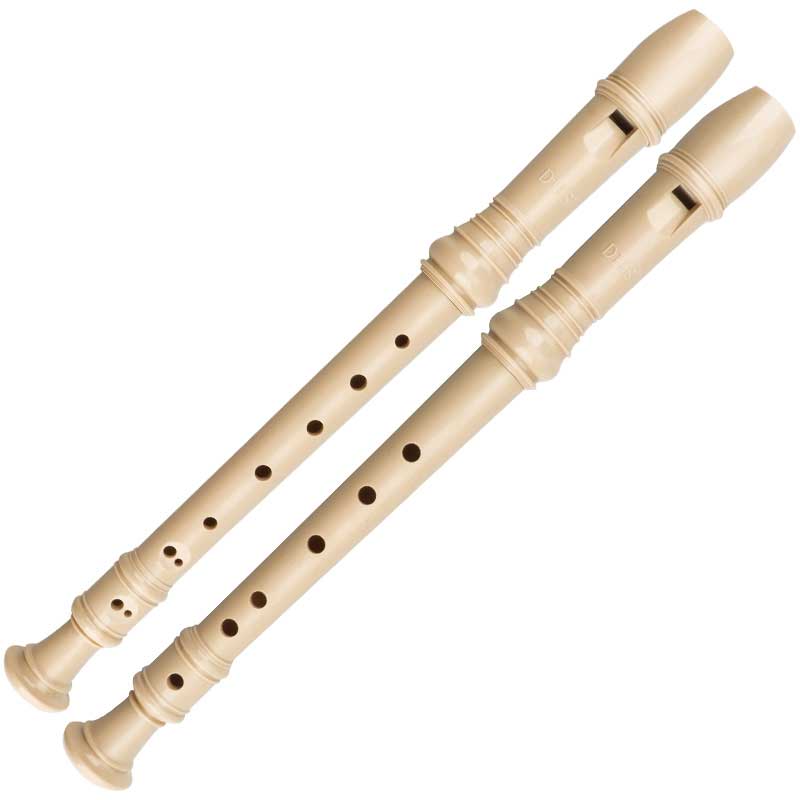
Look at the front of your soprano recorder, specifically the right-hand section where fingers 4 and 5 rest. On a Baroque-fingered instrument, the fourth hole (right index finger) is noticeably smaller than the fifth. This isn't cosmetic—it directly relates to how the F note gets played. German recorders flip this relationship: the fourth hole is larger, the fifth smaller. If you're holding a recorder right now, this single observation probably tells you which system you own.
Double Holes and Markings
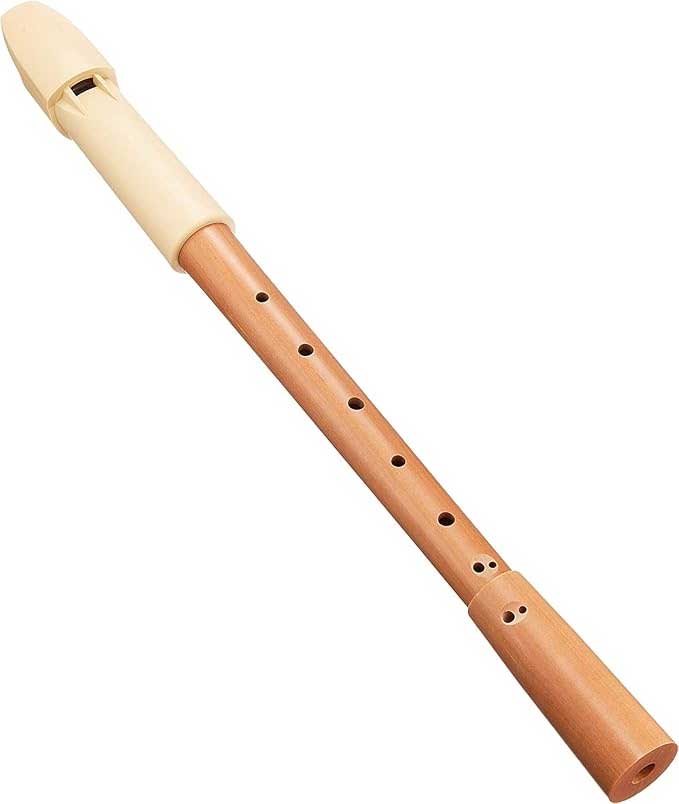
Baroque-fingered soprano recorders typically feature paired double holes for holes 6 and 7 (the two right-hand lower holes). These paired holes make it easier to produce certain accidentals—sharps and flats—with better intonation. German recorders usually have single, slightly larger holes in these positions instead. You may also notice stamped letters near the thumb hole: "B" or "E" on Baroque instruments, "G" on German ones. This is the manufacturer's way of confirming the fingering system.
The Real Difference: How F Gets Played
Everything traces back to one note: F (Fa). This is where the two systems diverge fundamentally, and understanding why helps explain the whole debate.

Baroque: Forked Fingering for F
In the Baroque system, producing a clean F requires a technique called forked fingering. You cover holes 1, 2, and 3 with your left hand as expected—but then you lift the right-hand fingers while keeping hole 4 partially covered, creating what's called a "vent" that lets just enough air escape to produce the correct pitch. This is trickier than it sounds, especially for small hands or beginners who haven't developed finger independence yet.
The payoff is consistency. Baroque fingering applies the same forked-fingering logic to accidentals throughout the instrument's range. When you need to play F-sharp or B-flat, the same underlying principle governs—controlled venting through strategically uncovered holes. This makes the system internally logical and adaptable across different keys.
German: Straight-Through F
German fingering sidesteps the forked technique for F. Instead, you simply close holes 1, 2, 3, and 4 consecutively—no venting required. For a six-year-old holding a recorder for the first time, this is obviously easier. The physical motion is straightforward.
The problem emerges when you need anything beyond basic diatonic playing. German F-sharp requires a completely different fingering pattern, one that often produces intonation problems. The system breaks down musically once you venture into keys with more than one sharp or flat, or whenever you need to play in ensemble with other instruments.
Cross-Recorder Compatibility: This Is Where It Gets Important
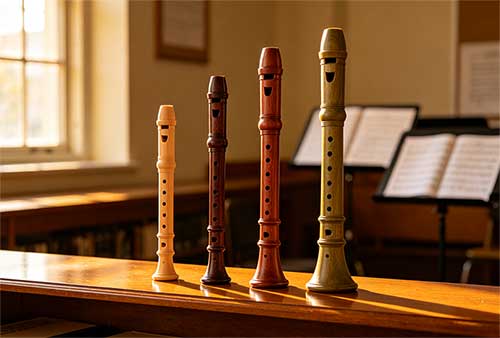
Recorder players don't stop at soprano. The family includes alto (also called treble), tenor, bass, and even contrabbass recorders. If you're serious about the instrument, you'll likely encounter some of these eventually. This is where German fingering shows its deepest limitation.
Baroque Scales Across the Family
Baroque fingering forms a coherent system across the entire recorder family. Once you've internalized the soprano fingering chart, you can sit down with an alto recorder and find that most of your knowledge transfers directly. The fingerings follow the same logic, the forked techniques apply consistently, and your intonation habits serve you well. Professional recorder players and serious amateurs typically own multiple sizes, all in Baroque fingering.
German Stops at Soprano
German fingering exists almost exclusively on soprano recorders. There is no German-alto or German-tenor system worth speaking of. If you learn German fingering and later decide to pick up an alto recorder—which you'll need for ensemble playing, since the alto sounds at the same pitch as C4 (middle C) and reads music in the treble clef without transposition—you'll find yourself starting from scratch. Every fingering you know is wrong on the new instrument.
This single fact is why most music educators consider German fingering a dead end. It's fine if you're absolutely certain you'll never progress beyond a single soprano recorder and never play anything more demanding than "Hot Cross Buns" in C major. But those conditions rarely hold for people who develop genuine enthusiasm for the instrument.
Sound and Response Differences
Beyond fingering logic, some players report subtle tonal differences between the two systems.
Tonal Character
Baroque-fingered recorders tend to produce a more centered, focused tone. The smaller fourth hole and double-hole design contribute to better harmonic resonance, particularly in the upper register. German instruments can sound slightly covered or dull by comparison, especially in ensemble contexts where projection matters.
Response and Flexibility
The forked fingerings in Baroque fingering take a moment to master, but once established, they offer more expressive control. You can shade notes, produce cleaner trills, and navigate chromatic passages more smoothly. German fingering feels more straightforward initially, but the lack of venting options means you have fewer tools when the music demands nuance.
Baroque Fingering vs German Recorder Comparison Chart: Recommendations by Situation
| Your Situation | Recommended System | Why |
|---|---|---|
| Adult beginner, any level of seriousness | Baroque fingering | The slight F difficulty is manageable; long-term upside is substantial |
| Child under 8 in formal lessons | Ask the teacher | Many school programs use German; follow the curriculum if the teacher prefers it |
| Child showing sustained interest beyond 6 months | Switch to Baroque | Investment in German fingering becomes a liability; better to transition early |
| Playing in school band or recorder ensemble | Match the group | Everyone needs to use the same fingering system for ensemble music to work |
| Interested in early music, Baroque repertoire | Baroque fingering only | Period performance practice; German fingering wasn't invented yet |
| Casual playing, no plans beyond simple melodies | German is acceptable | The limitations won't affect you if the music doesn't demand more |
If You Already Own a German Recorder
Found an old recorder in a closet and wondering if it's worth keeping? The practical answer depends on what you want to do with it.
If it's German-fingered and you want to keep learning, consider picking up a Baroque-fingered instrument and starting fresh on the correct system. You'll spend a few weeks reconciling the two in your muscle memory, but it's not a catastrophic setback—many players who've made this transition report it taking less time than they feared.
If the recorder is Baroque-fingered (look for those smaller fourth holes), you're already set. Just make sure any method books or finger charts you buy specify "Baroque" or "English fingering" to avoid confusion.
What About Method Books and Charts?
This is where confusion commonly arises. Not all recorder resources specify which fingering system they use, and mixing systems is genuinely problematic.
A fingering chart designed for Baroque recorders will show forked fingerings for certain notes. The same chart on a German recorder produces wrong pitches—or worse, notes that sound close enough to fool you until you try to play with others and discover you're slightly out of tune.
When purchasing method books, look for explicit mentions of "Baroque fingering" or "English fingering." If a book doesn't specify, check whether it uses forked fingerings in the early exercises—the presence of F with a lifted right-hand finger is a telltale sign of the Baroque system.
For reference, our interactive recorder fingering chart uses the Baroque system throughout, making it compatible with all standard recorder method books and ensemble literature.
The Historical Context
Understanding why these two systems exist helps contextualize the debate. Baroque fingering represents the traditional English and Continental European approach that developed alongside the instrument from the Renaissance onward. When we talk about Baroque music written for recorder—whether Vivaldi, Telemann, or the vast body of consort music—the fingerings implied are the ones we now call Baroque.
German fingering emerged in the 1950s as German music educators sought to simplify beginning recorder instruction for schoolchildren. The system made pedagogical sense for its original context: large classes, limited lesson time, and students who would likely never play beyond the first year. It achieved its goal of making those first notes easier.
What the German system didn't anticipate was how many students would discover genuine passion for the instrument and want to progress further. Those students found themselves trapped in a dead-end fingering system, needing to relearn everything to access the larger recorder repertoire.
"Baroque fingering is the standard international fingering used by professional recorder players and is the fingering system used in all recorder music published from the Renaissance onward. The alternative German fingering was developed in the mid-20th century as a simplified variant for use in German school education; it makes playing the note F easier for beginners, but limits technique and is not used outside of soprano recorders."
— Wikipedia: Recorder (musical instrument), Fingering section
This perspective from an established encyclopedic source reinforces the view held by most professional teachers: Baroque fingering isn't just one option among many—it's the standard that connects you to centuries of repertoire and the broader recorder community.
Avoiding Common Mistakes
Mistake: Assuming All Recorders Are the Same
Sellers don't always label fingering systems clearly. Before purchasing, check the hole sizes or look for the manufacturer's specification. A cheap recorder without fingering information is a gamble.
Mistake: Mixing Systems Mid-Learning
Starting with German and switching to Baroque mid-journey isn't impossible, but it's harder than starting correctly. If you're committed to recorder, commit to the system that scales with your growth.
Mistake: Trusting the School Recorder
If your child's school provides German-fingered recorders, that's fine for the classroom. But if you want to practice together at home or your child shows real interest, invest in a quality Baroque-fingered instrument. Don't let a school-default choice limit a potential passion.
Getting Started Right
For beginners serious about the recorder, the path forward is clear: start with a quality Baroque-fingered soprano recorder, find a method book that specifies Baroque fingering, and accept that F requires a bit more patience than on a German instrument. The foundation you build serves you across the entire instrument family and throughout decades of music-making.
Quality matters too—entry-level plastic recorders from reputable makers like Yamaha, Aulos, or Moeck offer consistent intonation and response that make the fingering system perform as designed. Cheap instruments with poorly positioned holes can make even Baroque fingering feel frustrating.
If you're still uncertain, consider renting a quality Baroque-fingered recorder for a month before committing to a purchase. Most music shops offer rental programs, and the investment gives you time to feel whether the recorder—and the fingering system—suits you. Renting is also a smart way to confirm Baroque fingering is right for you without the risk of buying an instrument you'll outgrow or want to replace.
Conclusion
The Baroque fingering vs German recorder question has a fairly clear answer for anyone planning to play beyond the first few months: choose Baroque. The forked fingering for F presents a minor initial challenge that pays dividends for years afterward. German fingering might make sense in very specific educational contexts, but for individual learners with any level of commitment, Baroque fingering opens more doors than it closes.
Your fingers will thank you when you're playing a Bach sonata on alto, sight-reading a Renaissance piece with a consort group, or simply finding that your recorder fingerings actually match the charts in your music book. The right choice made early saves you from relearning later—and that's really what this whole debate comes down to.